
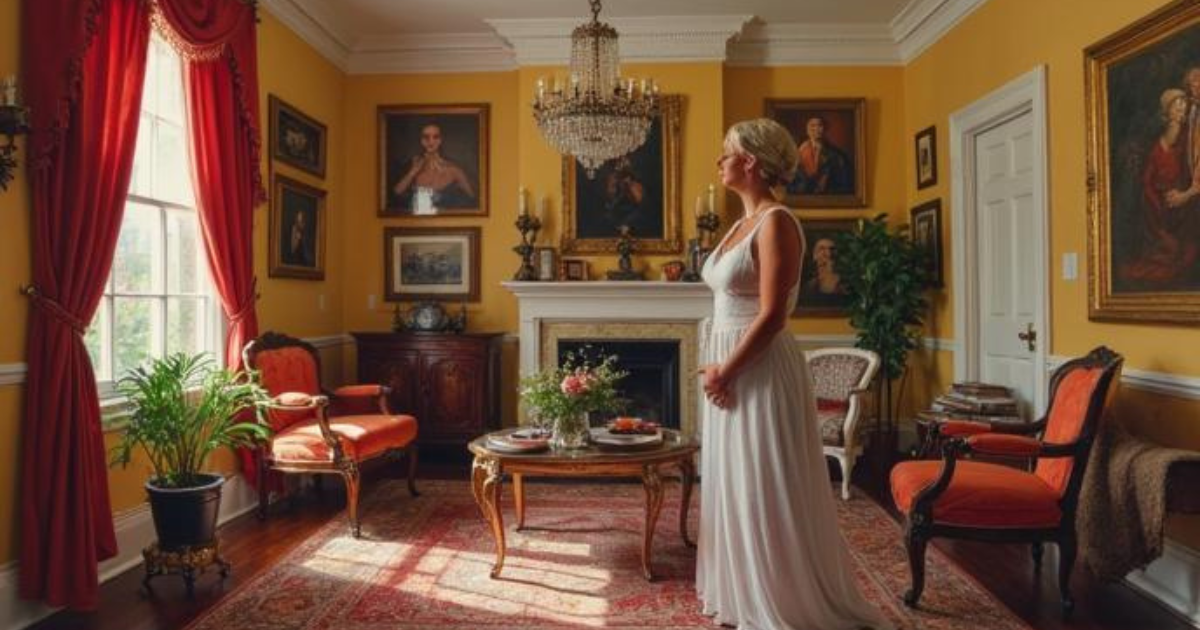
An excerpt from the original text.(complete · 1313 words)
he slept but a few hours. They were troubled and feverish hours,
disturbed with dreams that were intangible, that eluded her, leaving
only an impression upon her half-awakened senses of something
unattainable. She was up and dressed in the cool of the early morning.
The air was invigorating and steadied somewhat her faculties. However,
she was not seeking refreshment or help from any source, either
external or from within. She was blindly following whatever impulse
moved her, as if she had placed herself in alien hands for direction,
and freed her soul of responsibility.
Most of the people at that early hour were still in bed and asleep. A
few, who intended to go over to the Chênière for mass, were moving
about. The lovers, who had laid their plans the night before, were
already strolling toward the wharf. The lady in black, with her Sunday
prayer-book, velvet and gold-clasped, and her Sunday silver beads, was
following them at no great distance. Old Monsieur Farival was up, and
was more than half inclined to do anything that suggested itself. He
put on his big straw hat, and taking his umbrella from the stand in the
hall, followed the lady in black, never overtaking her.
The little negro girl who worked Madame Lebrun’s sewing-machine was
sweeping the galleries with long, absent-minded strokes of the broom.
Edna sent her up into the house to awaken Robert.
“Tell him I am going to the Chênière. The boat is ready; tell him to
hurry.”
He had soon joined her. She had never sent for him before. She had
never asked for him. She had never seemed to want him before. She did
not appear conscious that she had done anything unusual in commanding
his presence. He was apparently equally unconscious of anything
extraordinary in the situation. But his face was suffused with a quiet
glow when he met her.
They went together back to the kitchen to drink coffee. There was no
time to wait for any nicety of service. They stood outside the window
and the cook passed them their coffee and a roll, which they drank and
ate from the window-sill. Edna said it tasted good.
She had not thought of coffee nor of anything. He told her he had often
noticed that she lacked forethought.
“Wasn’t it enough to think of going to the Chênière and waking you
up?” she laughed. “Do I have to think of everything?—as Léonce says
when he’s in a bad humor. I don’t blame him; he’d never be in a bad
humor if it weren’t for me.”
They took a short cut across the sands. At a distance they could see
the curious procession moving toward the wharf—the lovers, shoulder to
shoulder, creeping; the lady in black, gaining steadily upon them; old
Monsieur Farival, losing ground inch by inch, and a young barefooted
Spanish girl, with a red kerchief on her head and a basket on her arm,
bringing up the rear.
Robert knew the girl, and he talked to her a little in the boat. No one
present understood what they said. Her name was Mariequita. She had a
round, sly, piquant face and pretty black eyes. Her hands were small,
and she kept them folded over the handle of her basket. Her feet were
broad and coarse. She did not strive to hide them. Edna looked at her
feet, and noticed the sand and slime between her brown toes.
Beaudelet grumbled because Mariequita was there, taking up so much
room. In reality he was annoyed at having old Monsieur Farival, who
considered himself the better sailor of the two. But he would not
quarrel with so old a man as Monsieur Farival, so he quarreled with
Mariequita. The girl was deprecatory at one moment, appealing to
Robert. She was saucy the next, moving her head up and down, making
“eyes” at Robert and making “mouths” at Beaudelet.
The lovers were all alone. They saw nothing, they heard nothing. The
lady in black was counting her beads for the third time. Old Monsieur
Farival talked incessantly of what he knew about handling a boat, and
of what Beaudelet did not know on the same subject.
Edna liked it all. She looked Mariequita up and down, from her ugly
brown toes to her pretty black eyes, and back again.
“Why does she look at me like that?” inquired the girl of Robert.
“Maybe she thinks you are pretty. Shall I ask her?”
“No. Is she your sweetheart?”
“She’s a married lady, and has two children.”
“Oh! well! Francisco ran away with Sylvano’s wife, who had four
children. They took all his money and one of the children and stole his
boat.”
“Shut up!”
“Does she understand?”
“Oh, hush!”
“Are those two married over there—leaning on each other?”
“Of course not,” laughed Robert.
“Of course not,” echoed Mariequita, with a serious, confirmatory bob of
the head.
The sun was high up and beginning to bite. The swift breeze seemed to
Edna to bury the sting of it into the pores of her face and hands.
Robert held his umbrella over her. As they went cutting sidewise
through the water, the sails bellied taut, with the wind filling and
overflowing them. Old Monsieur Farival laughed sardonically at
something as he looked at the sails, and Beaudelet swore at the old man
under his breath.
Sailing across the bay to the Chênière Caminada, Edna felt as if she
were being borne away from some anchorage which had held her fast,
whose chains had been loosening—had snapped the night before when the
mystic spirit was abroad, leaving her free to drift whithersoever she
chose to set her sails. Robert spoke to her incessantly; he no longer
noticed Mariequita. The girl had shrimps in her bamboo basket. They
were covered with Spanish moss. She beat the moss down impatiently, and
muttered to herself sullenly.
“Let us go to Grande Terre to-morrow?” said Robert in a low voice.
“What shall we do there?”
“Climb up the hill to the old fort and look at the little wriggling
gold snakes, and watch the lizards sun themselves.”
She gazed away toward Grande Terre and thought she would like to be
alone there with Robert, in the sun, listening to the ocean’s roar and
watching the slimy lizards writhe in and out among the ruins of the old
fort.
“And the next day or the next we can sail to the Bayou Brulow,” he went
on.
“What shall we do there?”
“Anything—cast bait for fish.”
“No; we’ll go back to Grande Terre. Let the fish alone.”
“We’ll go wherever you like,” he said. “I’ll have Tonie come over and
help me patch and trim my boat. We shall not need Beaudelet nor any
one. Are you afraid of the pirogue?”
“Oh, no.”
“Then I’ll take you some night in the pirogue when the moon shines.
Maybe your Gulf spirit will whisper to you in which of these islands
the treasures are hidden—direct you to the very spot, perhaps.”
“And in a day we should be rich!” she laughed. “I’d give it all to you,
the pirate gold and every bit of treasure we could dig up. I think you
would know how to spend it. Pirate gold isn’t a thing to be hoarded or
utilized. It is something to squander and throw to the four winds, for
the fun of seeing the golden specks fly.”
“We’d share it, and scatter it together,” he said. His face flushed.
They all went together up to the quaint little Gothic church of Our
Lady of Lourdes, gleaming all brown and yellow with paint in the sun’s
glare.
Only Beaudelet remained behind, tinkering at his boat, and Mariequita
walked away with her basket of shrimps, casting a look of childish ill
humor and reproach at Robert from the corner of her eye.
Master this chapter. Complete your experience
Purchase the complete book to access all chapters and support classic literature
As an Amazon Associate, we earn a small commission from qualifying purchases at no additional cost to you.
Available in paperback, hardcover, and e-book formats
Let's Analyse the Pattern
The unconscious habit of seeking approval for desires and choices that are rightfully yours to make.
Why This Matters
Connect literature to life
This chapter teaches how to recognize when you're asking permission for things you're already entitled to want or do.
Practice This Today
This week, notice when you apologize before stating an opinion or over-explain routine decisions—then practice stating what you want without justification.
Now let's explore the literary elements.
Key Quotes & Analysis
"She was blindly following whatever impulse moved her, as if she had placed herself in alien hands for direction, and freed her soul of responsibility."
Context: Describing Edna's state of mind as she decides to go to the Chênière
This shows Edna's first experience of acting on pure instinct rather than social obligation. She's discovering what it feels like to follow her own desires instead of others' expectations.
In Today's Words:
She was just going with her gut for once, not overthinking or worrying about what anyone else would think.
"Tell him I am going to the Chênière. The boat is ready; tell him to hurry."
Context: Her message to Robert through the servant girl
This simple command represents a revolutionary act - she's initiating contact with a man and expecting him to accommodate her plans. No apology, no explanation, just direct communication of her wants.
In Today's Words:
I'm leaving, and I want him to come with me - no games, no hints, just straight talk.
"The voice of the sea is seductive; never ceasing, whispering, clamoring, murmuring, inviting the soul to wander for a spell in abysses of solitude."
Context: Describing the ocean's effect on Edna during the boat trip
The sea represents freedom from social constraints and the dangerous allure of following one's deepest desires, even into unknown territory.
In Today's Words:
The ocean was calling to something deep inside her, promising freedom even if it meant being completely alone.
Thematic Threads
Personal Agency
In This Chapter
Edna stops asking permission and starts acting on her desires directly
Development
Evolution from passive compliance to active choice-making
In Your Life:
Notice when you apologize for taking up space or over-explain your legitimate needs
Social Boundaries
In This Chapter
Edna observes Mariequita challenging conventions while she begins her own rebellion
Development
Growing awareness of different ways to resist social expectations
In Your Life:
You can learn boundary-setting from watching how others navigate similar constraints
Authentic Desire
In This Chapter
Edna distinguishes between what she's supposed to want and what she actually wants
Development
First clear separation of external expectations from internal truth
In Your Life:
The hardest part of change is often figuring out what you actually want versus what you think you should want
Freedom
In This Chapter
Physical sensation of chains snapping, drifting wherever she chooses
Development
Metaphorical freedom becoming embodied experience
In Your Life:
Real freedom often starts as a physical sensation before becoming external action
Risk
In This Chapter
Choosing unknown territory over safe harbor of social expectations
Development
First conscious choice of uncertainty over security
In Your Life:
Growth requires leaving the safety of others' approval for the uncertainty of authentic living
You now have the context. Time to form your own thoughts.
Discussion Questions
- 1
What changes in Edna's behavior when she sends for Robert 'without explanation or apology'? What does this small act represent?
analysis • surface - 2
Why does Edna feel like 'chains had snapped' during the boat trip? What chains is Chopin referring to?
analysis • medium - 3
Where do you see people asking permission for things they're already entitled to in modern workplaces, healthcare, or relationships?
application • medium - 4
If someone in your life constantly over-explains their choices or apologizes for taking up space, how would you help them recognize this pattern?
application • deep - 5
What does Edna's journey suggest about the relationship between small rebellions and major life changes?
reflection • deep
Critical Thinking Exercise
Track Your Permission-Seeking
For the next 24 hours, notice when you ask permission for things you're entitled to or over-explain choices that don't require justification. Keep a simple tally: workplace situations, family interactions, social settings. Don't change your behavior yet—just observe. After 24 hours, identify the top three situations where you gave away your power unnecessarily.
Consider:
- •Pay attention to tone and body language, not just words
- •Notice the difference between collaboration and permission-seeking
- •Consider who benefits when you diminish yourself
Journaling Prompt
Write about one small rebellion you could try this week—something that requires no permission but feels scary to do without explanation. What's the worst that could realistically happen?
Coming Up Next...
Chapter 13: Awakening in a Strange Bed
At the church on Chênière Caminada, Edna will face an unexpected moment that forces her to confront just how dramatically she's changing—and how far she's willing to go in following her new impulses.



