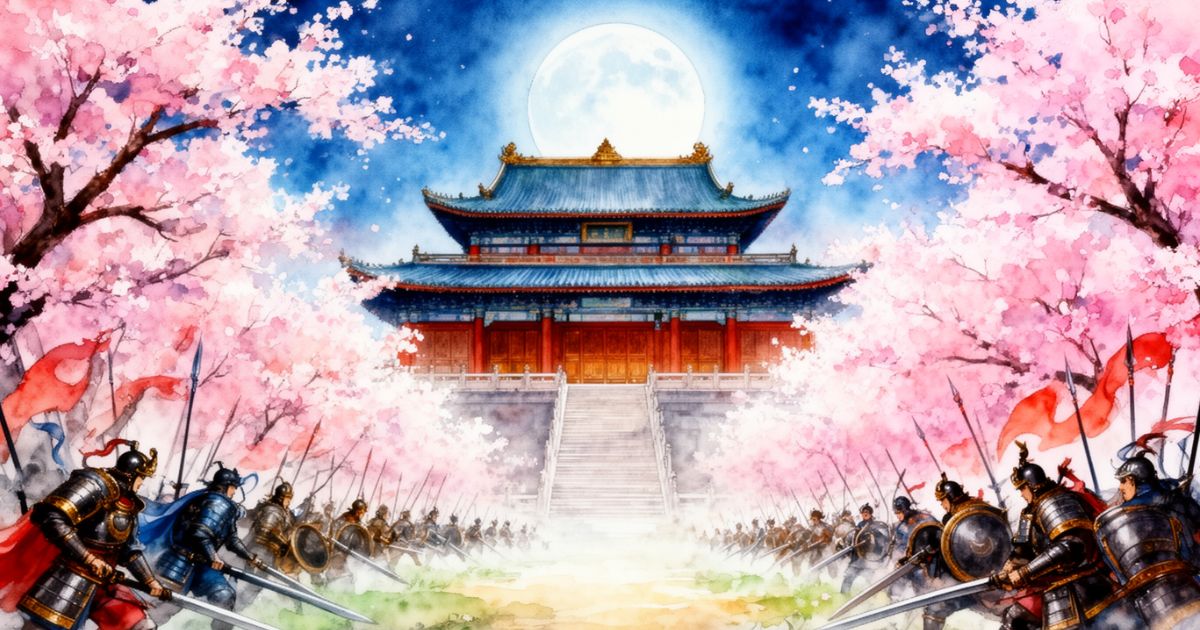
A chapter overview excerpt.(~180 words)
un Tzu said: The control of a large force is the same principle as the control of a few men: it is merely a question of dividing up their numbers.
In battle, there are not more than two methods of attack—the direct and the indirect; yet these two in combination give rise to an endless series of maneuvers.
Sun Tzu introduces the concept of 'energy' or momentum in strategy. Large organizations operate on the same principles as small ones—the difference is in structure and coordination. The two fundamental methods are direct (zheng) and indirect (qi) approaches, which combine endlessly.
The key insight: overwhelming force at the point of contact matters more than total strength. Like a torrent of water that moves boulders, or a falcon that breaks its prey's body, the skilled strategist generates momentum and releases it at the decisive moment.
Energy is about timing and concentration. The good fighter moves with 'the momentum of a round stone rolled down a mountain.' Once the forces are in motion, individual actions become almost automatic—like a crossbow releasing its stored energy.
Master this chapter. Complete your experience
Purchase the complete book to access all chapters and support classic literature
As an Amazon Associate, we earn a small commission from qualifying purchases at no additional cost to you.
Available in paperback, hardcover, and e-book formats
Let's Analyse the Pattern
Accumulating advantages and releasing them together at a focused point of maximum impact, rather than spreading effort thinly.
Why This Matters
Connect literature to life
Learning to accumulate advantages and release them together at focused points of maximum impact, rather than spreading effort across too many fronts.
Practice This Today
For your next major initiative, identify what advantages you can build quietly. Plan to release them together for maximum combined impact.
Now let's explore the literary elements.
Key Quotes & Analysis
"In battle, there are not more than two methods of attack—the direct and the indirect; yet these two in combination give rise to an endless series of maneuvers."
Context: Introducing the fundamental duality of strategic approaches
Infinite complexity emerges from two simple elements properly combined.
In Today's Words:
You have obvious moves and surprising moves. Mastery is knowing when to use which.
"The quality of decision is like the well-timed swoop of a falcon which enables it to strike and destroy its victim."
Context: Describing the decisive moment of committed action
Timing transforms accumulated energy into decisive result.
In Today's Words:
Build up your advantages, then release them all at once at exactly the right moment.
Thematic Threads
Strategy
In This Chapter
Direct and indirect approaches combine for infinite possibilities
Development
This duality underlies all tactical advice
In Your Life:
What's your 'direct' approach in a competitive situation? What unexpected 'indirect' move could you add?
Victory
In This Chapter
Victory comes from concentrated force at the decisive moment
Development
Total strength matters less than focused strength at the right point
In Your Life:
Are you spreading your efforts too thin, or concentrating for maximum impact?
You now have the context. Time to form your own thoughts.
Discussion Questions
- 1
What's the difference between 'direct' and 'indirect' approaches in your field?
analysis • medium - 2
When have you seen someone with fewer resources win through concentrated force?
reflection • medium - 3
What momentum are you building right now that you could release at a decisive moment?
application • medium
Critical Thinking Exercise
The Momentum Map
Map the momentum you're currently building toward a goal.
Consider:
- •What advantages are you accumulating? (skills, relationships, resources)
- •What's your 'direct' approach—the expected engagement?
- •What 'indirect' approach could surprise?
- •When would be the right moment to release concentrated force?
Journaling Prompt
Describe a time when you released accumulated advantages all at once. What was the effect compared to a gradual approach?
Coming Up Next...
Chapter 6: Weak Points and Strong
Sun Tzu reveals how to identify and exploit weaknesses—attacking where the enemy is unprepared...