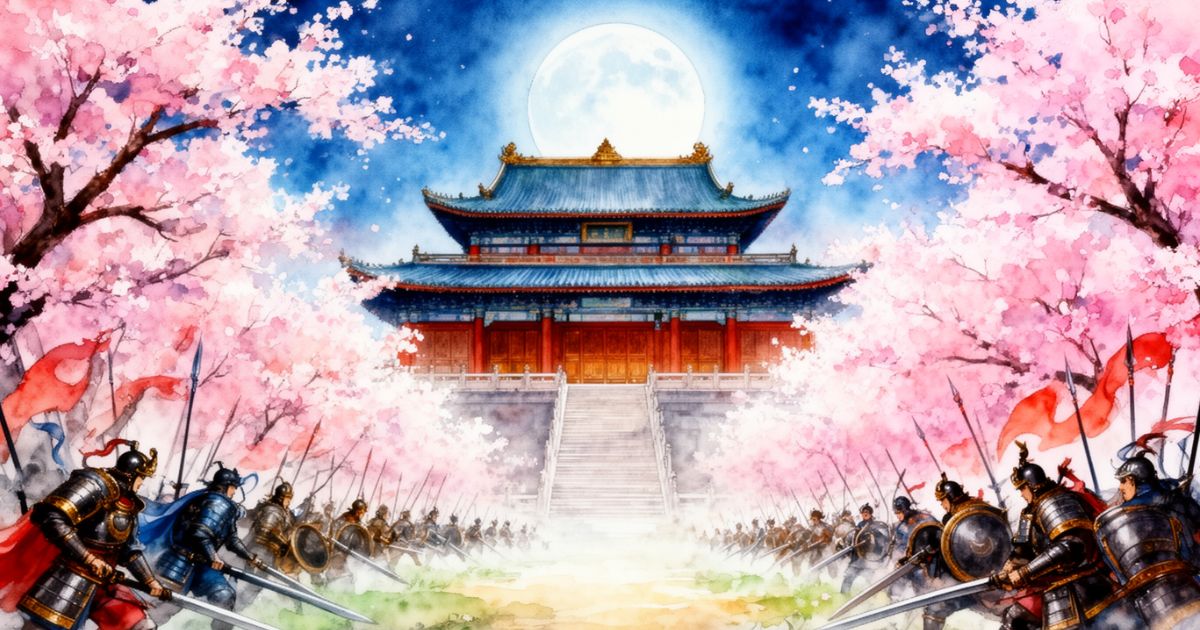
A chapter overview excerpt.(~445 words)
un Tzu said: The art of war is of vital importance to the State. It is a matter of life and death, a road either to safety or to ruin. Hence it is a subject of inquiry which can on no account be neglected.
The art of war, then, is governed by five constant factors, to be taken into account in one's deliberations, when seeking to determine the conditions obtaining in the field. These are: The Moral Law; Heaven; Earth; The Commander; Method and discipline.
Sun Tzu opens with a stark declaration: war is a matter of life and death, and no serious leader can afford to approach it carelessly. Before committing to any conflict, a leader must understand five constant factors that determine the outcome — not luck, not bravado, but these fundamentals:
1. The Moral Law — does your people's will align with yours? Unity of purpose is the first and most decisive advantage.
2. Heaven — is the timing right? Circumstances, seasons, and conditions either work for you or against you.
3. Earth — do you know the terrain? Your resources, environment, and the physical realities of where you operate.
4. The Commander — is your leadership sharp? Wisdom, integrity, courage, and discipline in the one giving orders.
5. Method and Discipline — can your organization actually execute? Structure, logistics, and the systems that turn strategy into action.
Once these five factors are understood, Sun Tzu prescribes a ruthless pre-battle audit — seven questions a leader must ask to compare their position against the enemy's:
1. Which ruler has the Moral Law on his side — whose people are truly committed?
2. Which commander has the greater ability?
3. With whom lie the advantages of Heaven and Earth — timing and terrain?
4. On which side is discipline most rigorously enforced?
5. Which army is stronger?
6. On which side are officers and men more highly trained?
7. In which army is there greater constancy in reward and punishment?
Whoever wins more of these seven comparisons will prevail. This is not optimism — it is calculation.
Sun Tzu then introduces the principle that runs through the entire book: 'All warfare is based on deception.' Appear weak when you are strong. Appear far when you are near. Offer bait, feign disorder, strike when least expected. Deception is not dishonor — it is the essence of strategy.
The chapter closes with its sharpest insight: victory can be known in advance. The general who calculates carefully before the battle has already won. The one who enters without calculation has already lost. Planning is not preparation for war — it is the first act of war.
Master this chapter. Complete your experience
Purchase the complete book to access all chapters and support classic literature
As an Amazon Associate, we earn a small commission from qualifying purchases at no additional cost to you.
Available in paperback, hardcover, and e-book formats
Let's Analyse the Pattern
Honestly evaluating your position, resources, and circumstances before committing to a course of action—resisting the urge to act before you understand the situation.
Why This Matters
Connect literature to life
The ability to evaluate your actual position—strengths, weaknesses, resources, circumstances—without wishful thinking distorting the picture. Most failures come from not knowing where you really stand.
Practice This Today
Before your next major decision, use Sun Tzu's five factors. Assess: alignment, timing, environment, leadership quality, and execution capability. Be brutally honest.
Now let's explore the literary elements.
Key Quotes & Analysis
"The art of war is of vital importance to the State. It is a matter of life and death."
Context: Opening lines establishing the stakes of strategic competition
Sun Tzu demands we take competition seriously. Casual approaches to strategy lead to failure.
In Today's Words:
Competition is serious business—treat it that way or suffer the consequences
"All warfare is based on deception."
Context: Introducing the fundamental principle of strategic misdirection
Not immoral lying, but strategic control of information. Your opponent should never know your true position or intentions.
In Today's Words:
Don't show your hand. Keep competitors guessing about your real plans and capabilities.
"The general who wins a battle makes many calculations in his temple before the battle is fought."
Context: Emphasizing the importance of planning and assessment before action
Victory is determined by preparation. Those who calculate carefully beforehand have already won.
In Today's Words:
Do your homework before you commit. The work you do before launch determines success.
Thematic Threads
Strategy
In This Chapter
Victory is calculated in advance through systematic assessment
Development
This theme of calculation before action runs through the entire work
In Your Life:
Before your next major decision, do you honestly assess your position or rush in hoping for the best?
Deception
In This Chapter
All warfare is based on deception—controlling what opponents believe
Development
Sun Tzu will elaborate on specific tactics for misdirection
In Your Life:
In competitive situations, are you revealing too much about your plans and position?
You now have the context. Time to form your own thoughts.
Discussion Questions
- 1
Why does Sun Tzu say 'all warfare is based on deception'? Is this ethical?
analysis • deep - 2
Think of a competition or conflict you lost. Which of Sun Tzu's five factors did you misjudge?
reflection • medium - 3
How do you balance thorough assessment with the need to act quickly in fast-moving situations?
application • medium
Critical Thinking Exercise
The Five Factors Analysis
Apply Sun Tzu's five constant factors to a current competitive situation in your life—job search, business challenge, or personal goal.
Consider:
- •Moral Law: How aligned and committed are you/your team?
- •Heaven: Is the timing favorable? What external conditions affect you?
- •Earth: What's your terrain—resources, advantages, vulnerabilities?
- •Commander: What's the quality of leadership (including your own)?
- •Method: Can you actually execute, or are there capability gaps?
Journaling Prompt
Where are you weakest in the five factors? What would honest assessment require you to change?
Coming Up Next...
Chapter 2: Waging War
Having established the fundamentals, Sun Tzu addresses the economics of competition and why prolonged campaigns are ruinous...