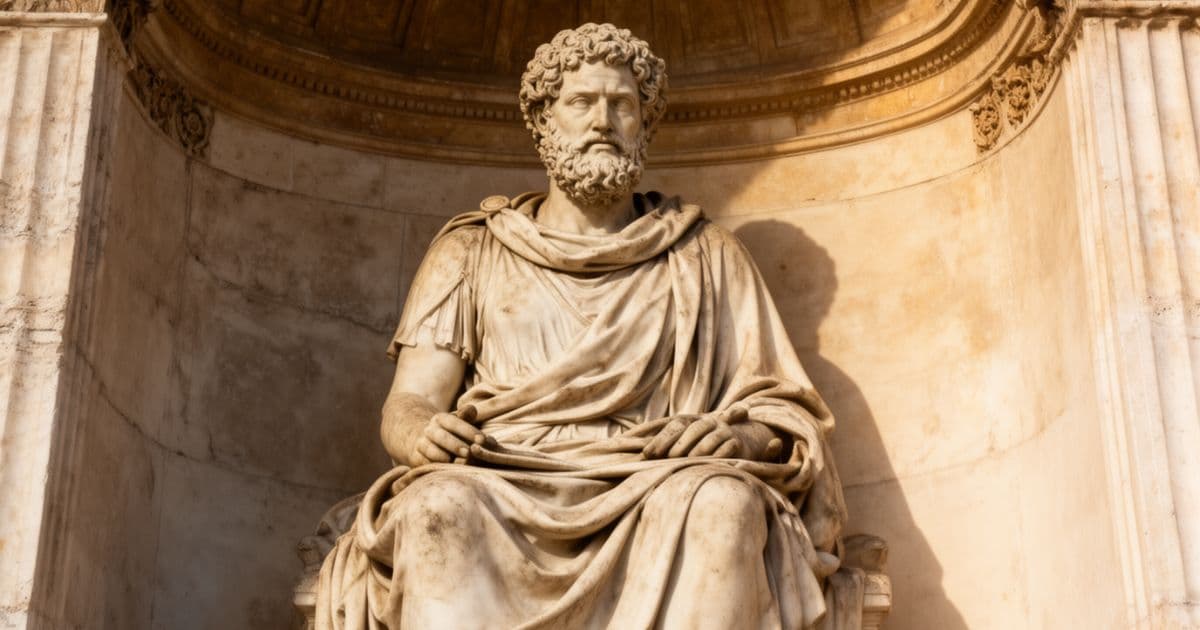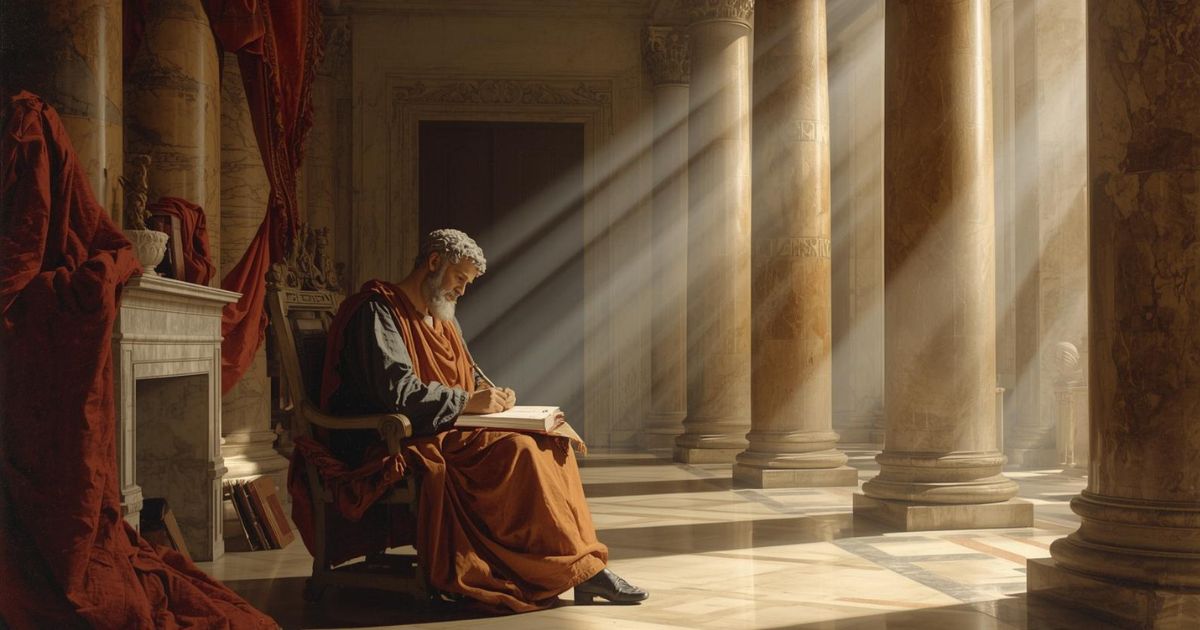
An excerpt from the original text.(complete · 2067 words)
←etter 78. On the healing power of the mindMoral letters to Luciliusby Seneca, translated by Richard Mott GummereLetter 79. On the rewards of scientific discoveryLetter 80. On worldly deceptions→483288Moral letters to Lucilius — Letter 79. On the rewards of scientific discoveryRichard Mott GummereSeneca LXXIX. ON THE REWARDS OF SCIENTIFIC DISCOVERY 1. I have been awaiting a letter from you, that you might inform me what new matter was revealed to you during your trip round Sicily,[1] and especially that you might give me further information regarding Charybdis itself.[2] I know very well that Scylla is a rock—and indeed a rock not dreaded by mariners; but with regard to Charybdis I should like to have a full description, in order to see whether it agrees with the accounts in mythology; and, if you have by chance investigated it (for it is indeed worthy of your investigation), please enlighten me concerning the following: Is it lashed into a whirlpool by a wind from only one direction, or do all storms alike serve to disturb its depths? Is it true that objects snatched downwards by the whirlpool in that strait are carried for many miles under water, and then come to the surface on the beach near Tauromenium?[3] 2. If you will write me a full account of these matters, I shall then have the boldness to ask you to perform another task,—also to climb Aetna at my special request. Certain naturalists have inferred that the mountain is wasting away and gradually settling, because sailors used to be able to see it from a greater distance. The reason for this may be, not that the height of the mountain is decreasing, but because the flames have become dim and the eruptions less strong and less copious, and because for the same reason the smoke also is less active by day. However, either of these two things is possible to believe: that on the one hand the mountain is growing smaller because it is consumed from day to day, and that, on the other hand, it remains the same in size because the mountain is not devouring itself, but instead of this the matter which seethes forth collects in some subterranean valley and is fed by other material, finding in the mountain itself not the food which it requires, but simply a passage-way out. 3. There is a well-known place in Lycia—called by the inhabitants “Hephaestion”[4]—where the ground is full of holes in many places and is surrounded by a harmless fire, which does no injury to the plants that grow there. Hence the place is fertile and luxuriant with growth, because the flames do not scorch but merely shine with a force that is mild and feeble. 4. But let us postpone this discussion, and look into the matter when you have given me a description just how far distant the snow lies from the crater,—I mean the snow which does not melt even in summer, so safe is it from the adjacent fire. But there is no ground for your charging this work to my account; for you were about to gratify your own craze for fine writing, without a commission from anyone at all. 5. Nay, what am I to offer you not merely to describe[5] Aetna in your poem, and not to touch lightly upon a topic which is a matter of ritual for all poets? Ovid[6] could not be prevented from using this theme simply because Vergil[7] had already fully covered it; nor could either of these writers frighten off Cornelius Severus. Besides, the topic has served them all with happy results, and those who have gone before seem to me not to have forestalled all that could be said, but merely to have opened the way. 6. It makes a great deal of difference whether you approach a subject that has been exhausted, or one where the ground has merely been broken; in the latter case, the topic grows day by day, and what is already discovered does not hinder new discoveries. Besides, he who writes last has the best of the bargain; he finds already at hand words which, when marshalled in a different way, show a new face. And he is not pilfering them, as if they belonged to someone else, when he uses them, for they are common property. 7. Now if Aetna does not make your mouth water, I am mistaken in you. You have for some time been desirous of writing something in the grand style and on the level of the older school. For your modesty does not allow you to set your hopes any higher; this quality of yours is so pronounced that, it seems to me, you are likely to curb the force of your natural ability, if there should be any danger of outdoing others; so greatly do you reverence the old masters. 8. Wisdom has this advantage, among others,—that no man can be outdone by another, except during the climb. But when you have arrived at the top, it is a draw;[8] there is no room for further ascent, the game is over. Can the sun add to his size? Can the moon advance beyond her usual fulness? The seas do not increase in bulk. The universe keeps the same character, the same limits. 9. Things which have reached their full stature cannot grow higher. Men who have attained wisdom will therefore be equal and on the same footing. Each of them will possess his own peculiar gifts[9]: one will be more affable, another more facile, another more ready of speech, a fourth more eloquent; but as regards the quality under discussion,—the element that produces happiness,—it is equal in them all. 10. I do not know whether this Aetna of yours can collapse and fall in ruins, whether this lofty summit, visible for many miles over the deep sea, is wasted by the incessant power of the flames; but I do know that virtue will not be brought down to a lower plane either by flames or by ruins. Hers is the only greatness that knows no lowering; there can be for her no further rising or sinking. Her stature, like that of the stars in the heavens, is fixed. Let us therefore strive to raise ourselves to this altitude. 11. Already much of the task is accomplished; nay, rather, if I can bring myself to confess the truth, not much. For goodness does not mean merely being better than the lowest. Who that could catch but a mere glimpse of the daylight would boast his powers of vision? One who sees the sun shining through a mist may be contented meanwhile that he has escaped darkness, but he does not yet enjoy the blessing of light. 12. Our souls will not have reason to rejoice in their lot until, freed from this darkness in which they grope, they have not merely glimpsed the brightness with feeble vision, but have absorbed the full light of day and have been restored to their place in the sky,—until, indeed, they have regained the place which they held at the allotment of their birth. The soul is summoned upward by its very origin. And it will reach that goal even before it is released from its prison below, as soon as it has cast off sin and, in purity and lightness, has leaped up into celestial realms of thought. 13. I am glad, beloved Lucilius, that we are occupied with this ideal, that we pursue it with all our might, even though few know it, or none. Fame is the shadow of virtue; it will attend virtue even against her will. But, as the shadow sometimes precedes and sometimes follows or even lags behind, so fame sometimes goes before us and shows herself in plain sight, and sometimes is in the rear, and is all the greater in proportion as she is late in coming, when once envy has beaten a retreat. 14. How long did men believe Democritus[10] to be mad! Glory barely came to Socrates. And how long did our state remain in ignorance of Cato! They rejected him, and did not know his worth until they had lost him. If Rutilius[11] had not resigned himself to wrong, his innocence and virtue would have escaped notice; the hour of his suffering was the hour of his triumph. Did he not give thanks for his lot, and welcome his exile with open arms? I have mentioned thus far those to whom Fortune has brought renown at the very moment of persecution; but how many there are whose progress toward virtue has come to light only after their death! And how many have been ruined, not rescued, by their reputation? 15. There is Epicurus, for example; mark how greatly he is admired, not only by the more cultured, but also by this ignorant rabble. This man, however, was unknown to Athens itself, near which he had hidden himself away. And so, when he had already survived by many years his friend Metrodorus, he added in a letter these last words, proclaiming with thankful appreciation the friendship that had existed between them: “So greatly blest were Metrodorus and I that it has been no harm to us to be unknown, and almost unheard of, in this well-known land of Greece.”[12] 16. Is it not true, therefore, that men did not discover him until after he had ceased to be? Has not his renown shone forth, for all that? Metrodorus also admits this fact in one of his letters:[13] that Epicurus and he were not well known to the public; but he declares that after the lifetime of Epicurus and himself any man who might wish to follow in their footsteps would win great and ready-made renown. 17. Virtue is never lost to view; and yet to have been lost to view is no loss. There will come a day which will reveal her, though hidden away or suppressed by the spite of her contemporaries. That man is born merely for a few, who thinks only of the people of his own generation. Many thousands of years and many thousands of peoples will come after you; it is to these that you should have regard. Malice may have imposed silence upon the mouths of all who were alive in your day; but there will come men who will judge you without prejudice and without favour. If there is any reward that virtue receives at the hands of fame, not even this can pass away. We ourselves, indeed, shall not be affected by the talk of posterity; nevertheless, posterity will cherish and celebrate us even though we are not conscious thereof. 18. Virtue has never failed to reward a man, both during his life and after his death, provided he has followed her loyally, provided he has not decked himself out or painted himself up, but has been always the same, whether he appeared before men’s eyes after being announced, or suddenly and without preparation. Pretence accomplishes nothing. Few are deceived by a mask that is easily drawn over the face. Truth is the same in every part. Things which deceive us have no real substance. Lies are thin stuff; they are transparent, if you examine them with care. Farewell. ↑ Ellis suggests that the poem Aetna, of uncertain authorship, may have been written by Lucilius in response to this letter. His view is plausible, but not universally accepted. ↑ See Ep. xiv. § 8 and note (Vol. I.). ↑ The modern Taormina. ↑ Another description of this region is given by Pliny, N. H. ii. 106, who says that the stones in the rivers were red-hot! The phenomenon is usually explained by supposing springs of burning naphtha. ↑ i.e., merely as an episode, instead of devoting a whole poem to the subject. ↑ Metam. xv. 340 ff. ↑ Aeneid, iii. 570 ff. ↑ The usual meaning of paria esse, or paria facere (a favourite phrase with Seneca—see for example Ep. ci. 7), is “to square the account,” “balance even.” ↑ “Qualities desirable in themselves, but not essential for the possession of wisdom, the προηγμένα of the Stoics,” (Summers). ↑ There is an unauthenticated story that the men of Abdera called in Hippocrates to treat his malady. ↑ Cf. Ep. xxiv. 4 exilium . . . tulit Rutilius etiam libenter. ↑ Frag. 188 Usener. ↑ Frag. 43 Körte.
Master this chapter. Complete your experience
Purchase the complete book to access all chapters and support classic literature
As an Amazon Associate, we earn a small commission from qualifying purchases at no additional cost to you.
Available in paperback, hardcover, and e-book formats
Let's Analyse the Pattern
The Recognition Delay - Why True Value Takes Time
Genuine value often goes unrecognized initially but eventually surfaces, while shallow achievements get immediate attention but fade quickly.
Why This Matters
Connect literature to life
This chapter teaches how to separate immediate validation from lasting respect and build toward the latter.
Practice This Today
This week, notice when someone gets praised for dramatic actions versus steady competence—track which type of contribution people remember and rely on six months later.
Now let's explore the literary elements.
Key Quotes & Analysis
"The sun cannot grow larger, nor the moon fuller, than they are; and those who have reached the heights of wisdom stand upon the same level."
Context: Explaining why wise people don't compete with each other for recognition
This reveals Seneca's understanding that true wisdom isn't about being better than others but about reaching a state of completeness. It's a profound insight about how the highest achievements transcend competition.
In Today's Words:
Once you really get it, you're not trying to one-up other people who get it too - you're all in the same club.
"Virtue is never lost to view; and even if virtue has been clouded over by the intervening period, it will shine forth again."
Context: Arguing that good character will eventually be recognized even if not immediately appreciated
This offers comfort to anyone who feels their good work goes unnoticed. Seneca promises that authentic virtue has a way of making itself known, even across generations.
In Today's Words:
Good people doing good things will eventually get credit, even if it takes a while for people to notice.
"Let us examine ourselves and rid ourselves of the faults which have sunk into us like rust."
Context: Encouraging self-improvement rather than seeking external validation
This shifts focus from what others think of us to the actual work of becoming better people. The rust metaphor suggests that character flaws accumulate slowly and require deliberate effort to remove.
In Today's Words:
Instead of worrying about your reputation, work on actually fixing what's wrong with you.
Thematic Threads
Recognition
In This Chapter
Seneca argues that virtue is like a shadow—sometimes it appears before us, sometimes behind, but it always follows true achievement
Development
Builds on earlier themes about internal vs external validation, showing how time reveals true worth
In Your Life:
You might notice this when your careful, steady work gets overlooked while flashier colleagues get promoted first.
Class
In This Chapter
The distinction between working for contemporary approval versus posterity's judgment reflects different social values
Development
Continues exploring how social position affects whose opinions matter and when
In Your Life:
You experience this when you have to choose between impressing your current boss or building skills that future employers will value.
Identity
In This Chapter
Seneca shows how wise people stand on equal ground regardless of when they lived or their circumstances
Development
Expands the idea that true worth transcends social markers and historical periods
In Your Life:
You see this when you realize that wisdom from your grandmother carries the same weight as advice from famous experts.
Personal Growth
In This Chapter
The chapter emphasizes focusing on character development over reputation management
Development
Deepens the ongoing theme that internal development matters more than external perception
In Your Life:
You practice this when you choose to learn a difficult skill even though no one will notice your effort for months.
Social Expectations
In This Chapter
Seneca challenges the expectation that good work should receive immediate recognition
Development
Continues questioning conventional wisdom about success and timing
In Your Life:
You encounter this when people expect you to be satisfied with 'exposure' instead of fair compensation for your expertise.
You now have the context. Time to form your own thoughts.
Discussion Questions
- 1
Why does Seneca say that great writers can all tackle the same subject like Mount Etna and each bring something valuable?
analysis • surface - 2
What does Seneca mean when he says that people who achieve true wisdom are all equal, like the sun can't get bigger or the moon fuller?
analysis • medium - 3
Think about someone you know who does excellent work but doesn't get much recognition. What patterns do you notice about why good work sometimes goes unnoticed?
application • medium - 4
If you focused on building 'recognition debt' - doing work so good that future you gets credit even if present you doesn't - how would that change your approach to your job or responsibilities?
application • deep - 5
Why do you think humans are so drawn to immediate validation, and what does this chapter suggest about the relationship between instant gratification and lasting value?
reflection • deep
Critical Thinking Exercise
Map Your Recognition Timeline
Draw a timeline of your last five years. Mark moments when you got immediate recognition for something, and separately mark times when you did important work that went unnoticed. Now look ahead five years and predict which contributions will matter more in the long run. What patterns do you see about the gap between doing good work and getting credit for it?
Consider:
- •Consider work that felt invisible at the time but created lasting value
- •Notice whether the recognition you remember most came immediately or built over time
- •Think about whose opinions you're trying to earn versus whose respect you actually want long-term
Journaling Prompt
Write about a time when you did something important that nobody noticed. How did that feel, and looking back now, what value did that work create? What would change if you trusted that good work eventually gets recognized, even if not immediately?
Coming Up Next...
Chapter 80: The Theater of False Success
Taking a break from deep philosophy, Seneca finds himself with unexpected free time while everyone else is distracted by boxing matches. He uses this quiet moment to explore how the world's distractions and deceptions pull us away from what truly matters.