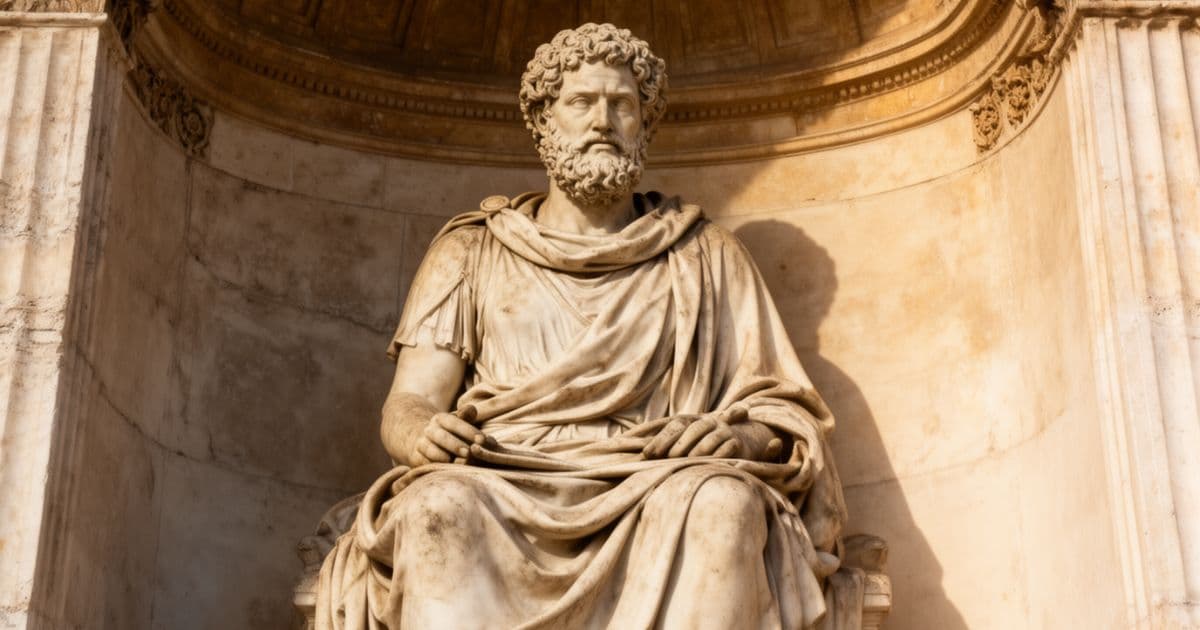
An excerpt from the original text.(complete · 844 words)
←etter 38. On quiet conversationMoral letters to Luciliusby Seneca, translated by Richard Mott GummereLetter 39. On noble aspirationsLetter 40. On the proper style for a philosopher's discourse→483008Moral letters to Lucilius — Letter 39. On noble aspirationsRichard Mott GummereSeneca XXXIX. ON NOBLE ASPIRATIONS 1. I shall indeed arrange for you, in careful order and narrow compass, the notes which you request. But consider whether you may not get more help from the customary method[1] than from that which is now commonly called a “breviary,” though in the good old days, when real Latin was spoken, it was called a “summary.”[2] The former is more necessary to one who is learning a subject, the latter to one who knows it. For the one teaches, the other stirs the memory. But I shall give you abundant opportunity for both.[3] A man like you should not ask me for this authority or that; he who furnishes a voucher for his statements argues himself unknown. 2. I shall therefore write exactly what you wish, but I shall do it in my own way; until then, you have many authors whose works will presumably keep your ideas sufficiently in order. Pick up the list of the philosophers; that very act will compel you to wake up, when you see how many men have been working for your benefit. You will desire eagerly to be one of them yourself. For this is the most excellent quality that the noble soul has within itself, that it can be roused to honourable things. No man of exalted gifts is pleased with that which is low and mean; the vision of great achievement summons him and uplifts him. 3. Just as the flame springs straight into the air and cannot be cabined or kept down any more than it can repose in quiet, so our soul is always in motion, and the more ardent it is, the greater its motion and activity. But happy is the man who has given it this impulse toward better things! He will place himself beyond the jurisdiction of chance; he will wisely control prosperity; he will lessen adversity, and will despise what others hold in admiration. 4. It is the quality of a great soul to scorn great things and to prefer that which is ordinary rather than that which is too great. For the one condition is useful and life-giving; but the other does harm just because it is excessive. Similarly, too rich a soil makes the grain fall flat, branches break down under too heavy a load, excessive productiveness does not bring fruit to ripeness. This is the case with the soul also; for it is ruined by uncontrolled prosperity, which is used not only to the detriment of others, but also to the detriment of itself. 5. What enemy was ever so insolent to any opponent as are their pleasures to certain men? The only excuse that we can allow for the incontinence and mad lust of these men is the fact that they suffer the evils which they have inflicted upon others. And they are rightly harassed by this madness, because desire must have unbounded space for its excursions, if it transgresses nature’s mean. For this has its bounds, but waywardness and the acts that spring from wilful lust are without boundaries. 6. Utility measures our needs; but by what standard can you check the superfluous? It is for this reason that men sink themselves in pleasures, and they cannot do without them when once they have become accustomed to them, and for this reason they are most wretched, because they have reached such a pass that what was once superfluous to them has become indispensable. And so they are the slaves of their pleasures instead of enjoying them; they even love their own ills,[4]—and that is the worst ill of all! Then it is that the height of unhappiness is reached, when men are not only attracted, but even pleased, by shameful things, and when there is no longer any room for a cure, now that those things which once were vices have become habits. Farewell. ↑ The regular method of studying philosophy was, as we infer from this letter, a course of reading in the philosophers. Seneca deprecates the use of the “cram” which is only a memory-help, as a substitute for reading, on the ground that by its use one does not, in the first place, learn the subject, and, in the second place and chiefly, that one loses the inspiration to be derived by direct contact with great thinkers. The request of Lucilius for a cram thus suggests the main topic of the letter, which is taken up in the second paragraph. ↑ i.e., the word breviarium, “abridgment,” “abstract,” has displaced the better word summarium, “outline of chief points.” ↑ i.e., to do the reading and to review it by means of the summary. The reading will enable Lucilius to identify for himself the authors of the several passages or doctrines. ↑ i.e., their pleasures. These ills, by being cultivated, become vices.
Master this chapter. Complete your experience
Purchase the complete book to access all chapters and support classic literature
As an Amazon Associate, we earn a small commission from qualifying purchases at no additional cost to you.
Available in paperback, hardcover, and e-book formats
Let's Analyse the Pattern
The process by which getting what we want creates the need for more of what we want, eventually enslaving us to our own desires.
Why This Matters
Connect literature to life
This chapter teaches how to recognize when normal wants transform into compulsive needs that control your choices.
Practice This Today
This week, notice when you reach for something you 'need' that you didn't need six months ago—ask yourself what you actually required before you got used to this upgrade.
Now let's explore the literary elements.
Key Quotes & Analysis
"The most excellent quality that the noble soul has within itself, that it can be roused to honorable things"
Context: Explaining what makes someone truly noble in character
This reveals that excellence isn't about what you have, but about your internal response to possibilities for good. Noble people naturally want to do better and be better. It's an internal compass that points toward virtue regardless of external circumstances.
In Today's Words:
Good people naturally want to step up when they see a chance to do the right thing.
"He who furnishes a voucher for his statements argues himself unknown"
Context: Telling Lucilius he doesn't need to cite authorities constantly
Seneca is teaching intellectual independence - if you understand something, you can explain it without constantly referencing famous names. Over-reliance on authorities suggests you don't really grasp the material yourself.
In Today's Words:
If you have to keep saying 'the experts say' instead of explaining it yourself, you probably don't really get it.
"Utility can have a measure, but the superfluous has none"
Context: Explaining why excess is dangerous and unlimited
This gets to the heart of why people become enslaved by their desires. What we need has natural limits, but what we want can grow infinitely. Without boundaries, our desires consume us rather than serve us.
In Today's Words:
You can figure out what you need, but wants can go on forever.
Thematic Threads
Personal Growth
In This Chapter
True growth means learning to want better rather than wanting more, distinguishing between needs and manufactured dependencies
Development
Building on earlier letters about self-mastery, now focusing specifically on desire management
In Your Life:
You might notice this when last year's salary raise already feels insufficient, or when your 'treat yourself' purchases have become routine expenses.
Class
In This Chapter
Seneca warns that prosperity without wisdom creates the same enslavement as poverty, just with different chains
Development
Continues the theme that external circumstances don't determine internal freedom
In Your Life:
You see this when people with more money seem just as stressed and trapped as those with less.
Social Expectations
In This Chapter
Society promotes the idea that more is always better, but Seneca argues this leads to misery disguised as success
Development
Challenges cultural assumptions about what constitutes a good life
In Your Life:
You experience this pressure when you feel like you should want the promotion, bigger house, or fancier lifestyle even when you're content.
Identity
In This Chapter
We can become so identified with our appetites and possessions that we defend our dependencies as part of who we are
Development
Explores how desires shape self-concept and personal identity
In Your Life:
You might catch yourself saying 'I'm not myself without my morning coffee' or 'I need this to be happy' and meaning it.
Human Relationships
In This Chapter
Appetite escalation affects relationships when we need others to provide ever-increasing validation, attention, or support
Development
Introduced here as a relational dynamic
In Your Life:
You see this when friendships become draining because someone always needs more reassurance, or when you find yourself requiring constant praise to feel valued.
You now have the context. Time to form your own thoughts.
Discussion Questions
- 1
What does Seneca mean when he says that great souls prefer what's ordinary and useful over what's excessive?
analysis • surface - 2
Why does Seneca compare uncontrolled prosperity to soil that's too rich, causing grain to fall flat?
analysis • medium - 3
Where do you see appetite escalation happening in modern life - things that start as treats but become daily requirements?
application • medium - 4
How would you help someone recognize when they've moved from wanting something to being owned by it?
application • deep - 5
What does this chapter reveal about the relationship between freedom and desire?
reflection • deep
Critical Thinking Exercise
Track Your Appetite Escalation
Choose one area of your life where you've noticed your standards or needs have gradually increased over time - maybe food, entertainment, shopping, or comfort items. Map out how this escalation happened: what did you start with, what do you need now, and what were the steps in between? Then identify one small way you could reset your baseline this week.
Consider:
- •Look for patterns where yesterday's luxury became today's necessity
- •Notice how your brain justifies each step up as reasonable or deserved
- •Consider whether the escalation actually increased your satisfaction or just your dependence
Journaling Prompt
Write about a time when you successfully resisted appetite escalation or deliberately chose the simpler option. What did you learn about yourself and what you actually need versus what you think you want?
Coming Up Next...
Chapter 40: Speaking Truth vs. Speaking Fast
Seneca shifts from discussing noble aspirations to examining how a philosopher should actually speak and write. He'll explore whether plain talk or fancy rhetoric better serves the pursuit of wisdom.