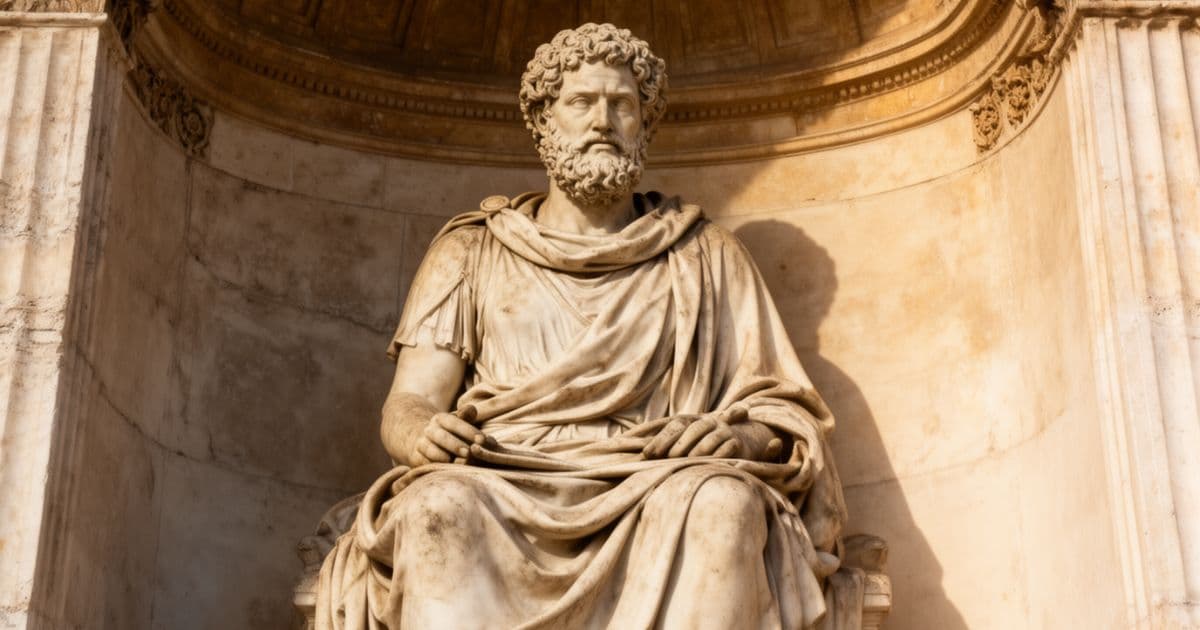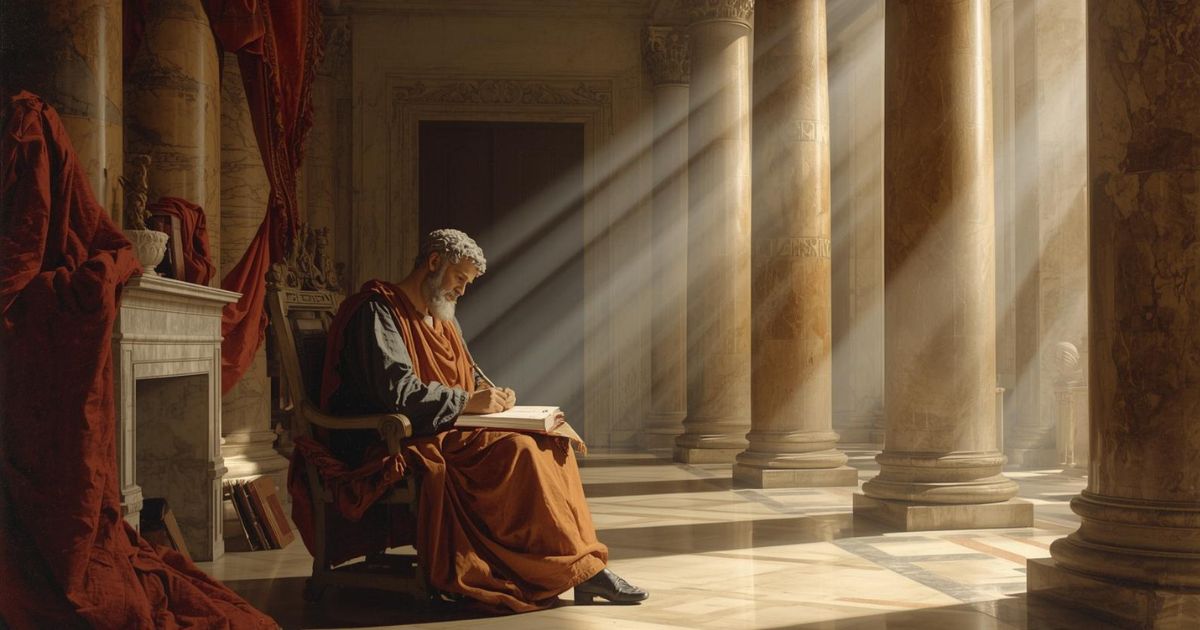
An excerpt from the original text.(complete · 1955 words)
←etter 13. On groundless fearsMoral letters to Luciliusby Seneca, translated by Richard Mott GummereLetter 14. On the reasons for withdrawing from the worldLetter 15. On brawn and brains→482850Moral letters to Lucilius — Letter 14. On the reasons for withdrawing from the worldRichard Mott GummereSeneca XIV. ON THE REASONS FOR WITHDRAWING FROM THE WORLD 1. I confess that we all have an inborn affection for our body; I confess that we are entrusted with its guardianship. I do not maintain that the body is not to be indulged at all; but I maintain that we must not be slaves to it. He will have many masters who makes his body his master, who is over-fearful in its behalf, who judges everything according to the body. 2. We should conduct ourselves not as if we ought to live for the body, but as if we could not live without it. Our too great love for it makes us restless with fears, burdens us with cares, and exposes us to insults. Virtue is held too cheap by the man who counts his body too dear. We should cherish the body with the greatest care; but we should also be prepared, when reason, self-respect, and duty demand the sacrifice, to deliver it even to the flames. 3. Let us, however, in so far as we can, avoid discomforts as well as dangers, and withdraw to safe ground, by thinking continually how we may repel all objects of fear. If I am not mistaken, there are three main classes of these: we fear want, we fear sickness, and we fear the troubles which result from the violence of the stronger. 4. And of all these, that which shakes us most is the dread which hangs over us from our neighbour’s ascendancy; for it is accompanied by great outcry and uproar. But the natural evils which I have mentioned,—want and sickness,—steal upon us silently with no shock of terror to the eye or to the ear. The other kind of evil comes, so to speak, in the form of a huge parade. Surrounding it is a retinue of swords and fire and chains and a mob of beasts to be let loose upon the disembowelled entrails of men. 5. Picture to yourself under this head the prison, the cross, the rack, the hook, and the stake which they drive straight through a man until it protrudes from his throat. Think of human limbs torn apart by chariots driven in opposite directions, of the terrible shirt smeared and interwoven with inflammable materials, and of all the other contrivances devised by cruelty, in addition to those which I have mentioned![1] 6. It is not surprising, then, if our greatest terror is of such a fate; for it comes in many shapes and its paraphernalia are terrifying. For just as the torturer accomplishes more in proportion to the number of instruments which he displays,—indeed, the spectacle overcomes those who would have patiently withstood the suffering,—similarly, of all the agencies which coerce and master our minds, the most effective are those which can make a display. Those other troubles are of course not less serious; I mean hunger, thirst, ulcers of the stomach, and fever that parches our very bowels. They are, however, secret; they have no bluster and no heralding; but these, like huge arrays of war, prevail by virtue of their display and their equipment. 7. Let us, therefore, see to it that we abstain from giving offence. It is sometimes the people that we ought to fear; or sometimes a body of influential oligarchs in the Senate, if the method of governing the State is such that most of the business is done by that body; and sometimes individuals equipped with power by the people and against the people. It is burdensome to keep the friendship of all such persons; it is enough not to make enemies of them. So the wise man will never provoke the anger of those in power; nay, he will even turn his course, precisely as he would turn from a storm if he were steering a ship. 8. When you travelled to Sicily, you crossed the Straits. The reckless pilot scorned the blustering South Wind,—the wind which roughens the Sicilian Sea and forces it into choppy currents; he sought not the shore on the left,[2] but the strand hard by the place where Charybdis throws the seas into confusion. Your more careful pilot, however, questions those who know the locality as to the tides and the meaning of the clouds; he holds his course far from that region notorious for its swirling waters. Our wise man does the same; he shuns a strong man who may be injurious to him, making a point of not seeming to avoid him, because an important part of one’s safety lies in not seeking safety openly; for what one avoids, one condemns. 9. We should therefore look about us, and see how we may protect ourselves from the mob. And first of all, we should have no cravings like theirs; for rivalry results in strife. Again, let us possess nothing that can be snatched from us to the great profit of a plotting foe. Let there be as little booty as possible on your person. No one sets out to shed the blood of his fellow-men for the sake of bloodshed,—at any rate very few. More murderers speculate on their profits than give vent to hatred. If you are empty-handed, the highwayman passes you by; even along an infested road, the poor may travel in peace.[3] 10. Next, we must follow the old adage and avoid three things with special care: hatred, jealousy, and scorn. And wisdom alone can show you how this may be done. It is hard to observe a mean; we must be chary of letting the fear of jealousy lead us into becoming objects of scorn, lest, when we choose not to stamp others down, we let them think that they can stamp us down. The power to inspire fear has caused many men to be in fear.[4] Let us withdraw ourselves in every way; for it is as harmful to be scorned as to be admired. 11. One must therefore take refuge in philosophy; this pursuit, not only in the eyes of good men, but also in the eyes of those who are even moderately bad, is a sort of protecting emblem.[5] For speech-making at the bar, or any other pursuit that claims the people’s attention, wins enemies for a man; but philosophy is peaceful and minds her own business. Men cannot scorn her; she is honoured by every profession, even the vilest among them. Evil can never grow so strong, and nobility of character can never be so plotted against, that the name of philosophy shall cease to be worshipful and sacred. Philosophy itself, however, should be practised with calmness and moderation. 12. “Very well, then,” you retort, “do you regard the philosophy of Marcus Cato as moderate? Cato’s voice strove to check a civil war. Cato parted the swords of maddened chieftains. When some fell foul of Pompey and others fell foul of Caesar, Cato defied both parties at once!” 13. Nevertheless, one may well question whether, in those days, a wise man ought to have taken any part in public affairs, and ask: “What do you mean, Marcus Cato? It is not now a question of freedom; long since has freedom gone to rack and ruin. The question is, whether it is Caesar or Pompey who controls the State. Why, Cato, should you take sides in that dispute? It is no business of yours; a tyrant is being selected. What does it concern you who conquers? The better man may win; but the winner is bound to be the worse man.”[6] I have referred to Cato’s final rôle. But even in previous years the wise man was not permitted to intervene in such plundering of the state; for what could Cato do but raise his voice and utter unavailing words? At one time he was “hustled” by the mob and spat upon and forcibly removed from the forum and marked for exile; at another, he was taken straight to prison from the senate-chamber. 14. However, we shall consider later[7] whether the wise man ought to give his attention to politics; meanwhile, I beg you to consider those Stoics who, shut out from public life, have withdrawn into privacy for the purpose of improving men’s existence and framing laws for the human race without incurring the displeasure of those in power. The wise man will not upset the customs of the people, nor will he invite the attention of the populace by any novel ways of living. 15. “What then? Can one who follows out this plan be safe in any case?” I cannot guarantee you this any more than I can guarantee good health in the case of a man who observes moderation; although, as a matter of fact, good health results from such moderation. Sometimes a vessel perishes in harbour; but what do you think happens on the open sea? And how much more beset with danger that man would be, who even in his leisure is not secure, if he were busily working at many things! Innocent persons sometimes perish; who would deny that? But the guilty perish more frequently. A soldier’s skill is not at fault if he receives the death-blow through his armour. 16. And finally, the wise man regards the reason for all his actions, but not the results. The beginning is in our own power; fortune decides the issue, but I do not allow her to pass sentence upon myself. You may say: “But she can inflict a measure of suffering and of trouble.” The highwayman does not pass sentence when he slays. 17. Now you are stretching forth your hand for the daily gift. Golden indeed will be the gift with which I shall load you; and, inasmuch as we have mentioned gold, let me tell you how its use and enjoyment may bring you greater pleasure. “He who needs riches least, enjoys riches most.”[8] “Author’s name, please!” you say. Now, to show you how generous I am, it is my intent to praise the dicta of other schools. The phrase belongs to Epicurus, or Metrodorus, or some one of that particular thinking-shop. 18. But what difference does it make who spoke the words? They were uttered for the world. He who craves riches feels fear on their account. No man, however, enjoys a blessing that brings anxiety; he is always trying to add a little more. While he puzzles over increasing his wealth, he forgets how to use it. He collects his accounts, he wears out the pavement in the forum, he turns over his ledger,[9]—in short, he ceases to be master and becomes a steward. Farewell. ↑ Cf. Tacitus, Annals, xv. 44, describing the tortures practised upon the Christians. ↑ Scylla was a rock on the Italian side of the Straits. Charybdis was a whirlpool on the Sicillian side. Servius on Vergil, Aeneid, iii, 420 defines the dextrum as the shore “to the right of those coming from the Ionian sea.” ↑ Cf. Juvenal, x. 22 cantabit vacuus coram latrone viator. ↑ Cf. the proverb necesse est multos timeat quem multi timent, which is found in Seneca, de Ira, ii. 11. 4 and often elsewhere. ↑ Literally, “is as good as a (priest’s) fillet.” ↑ Cf. Tac. Hist. i. 50 inter duos quorum bello solum id scires, deteriorem fore vicisset. ↑ See, for example, Letter xxii. ↑ Epicurus, Ep. iii. p. 63. 19 Usener. ↑ Named kalendarium because interest was reckoned according to the Kalends of each month.
Master this chapter. Complete your experience
Purchase the complete book to access all chapters and support classic literature
As an Amazon Associate, we earn a small commission from qualifying purchases at no additional cost to you.
Available in paperback, hardcover, and e-book formats
Let's Analyse the Pattern
Powerful people maintain control by making examples of visible targets, so survival often requires reducing your attack surface rather than direct confrontation.
Why This Matters
Connect literature to life
This chapter teaches how to identify when powerful people are looking for targets to make examples of, and how to avoid becoming one.
Practice This Today
This week, notice when someone in authority makes a public example of someone else—what behavior triggered it, and how could that person have avoided becoming a target?
Now let's explore the literary elements.
Key Quotes & Analysis
"We should conduct ourselves not as if we ought to live for the body, but as if we could not live without it."
Context: Explaining how to balance self-preservation with doing what's right
This captures the core tension of the chapter - we need to stay alive and healthy, but we can't let fear for our safety control all our decisions. It's about finding the middle ground between reckless heroism and cowardly submission.
In Today's Words:
Take care of yourself, but don't let fear of getting hurt stop you from living with integrity.
"He will have many masters who makes his body his master, who is over-fearful in its behalf, who judges everything according to the body."
Context: Warning against letting physical fear control your life
Seneca argues that when you're constantly worried about your safety, comfort, and physical needs, you become enslaved to those fears. Every decision gets filtered through 'but what if I get hurt?' which limits your freedom.
In Today's Words:
If you're always asking 'but is it safe?' you'll never really be free to make your own choices.
"We should cherish the body with the greatest care; but we should also be prepared, when reason, self-respect, and duty demand the sacrifice, to deliver it even to the flames."
Context: Defining when physical sacrifice might be necessary
This isn't about seeking martyrdom, but about knowing there are some lines you won't cross even to save yourself. It's the recognition that some things are worth risking your safety for - but those things should be carefully chosen.
In Today's Words:
Take good care of yourself, but know what you'd be willing to risk your safety for when push comes to shove.
Thematic Threads
Class
In This Chapter
Seneca advocates for having fewer possessions that create envy or make you a target for theft
Development
Builds on earlier themes about wealth anxiety, now focusing on how possessions create vulnerability
In Your Life:
You might notice how flashing money or success at work can make you a target for resentment or theft
Power
In This Chapter
Those in authority maintain control through public examples and spectacles of punishment
Development
Introduced here as analysis of how dangerous people operate
In Your Life:
You see this when bosses make examples of employees who challenge them publicly
Identity
In This Chapter
Seneca questions the value of heroic confrontation versus strategic survival
Development
Challenges earlier Stoic emphasis on virtue by examining when courage becomes foolishness
In Your Life:
You might struggle with whether standing up to unfair treatment is worth the potential consequences
Social Expectations
In This Chapter
Society expects us to confront injustice directly, but Seneca advocates for strategic withdrawal
Development
Introduced here as tension between social heroism and personal survival
In Your Life:
You feel pressure to speak up about workplace problems even when you know it might cost you your job
Personal Growth
In This Chapter
Philosophy becomes a refuge that even dangerous people tend to respect
Development
Continues theme of inner development as protection against external chaos
In Your Life:
You find that focusing on learning and self-improvement makes you less threatening to insecure people
You now have the context. Time to form your own thoughts.
Discussion Questions
- 1
According to Seneca, what are the three main fears people face, and why is the third one the most dangerous?
analysis • surface - 2
Why does Seneca compare wise people to ship captains who steer around storms rather than sailing through them?
analysis • medium - 3
Where do you see examples today of powerful people making spectacles out of punishing others to maintain control?
application • medium - 4
Think about a situation where you've had to deal with someone who had power over you. How might Seneca's advice about strategic withdrawal have changed your approach?
application • deep - 5
What does Seneca's observation that 'those who need riches least enjoy them most' reveal about the relationship between security and happiness?
reflection • deep
Critical Thinking Exercise
Map Your Attack Surface
List three areas of your life where you might be vulnerable to someone with power over you - your job, family dynamics, or community relationships. For each area, identify what makes you a potential target and what you could do to reduce that vulnerability without compromising your values. Think like Seneca's ship captain: where are the storms you should navigate around?
Consider:
- •What possessions, achievements, or knowledge make you stand out in ways that could create envy?
- •Which powerful people in your life have shown patterns of making examples out of others?
- •What would strategic withdrawal look like versus complete avoidance or confrontation?
Journaling Prompt
Write about a time when you had to choose between standing up to someone powerful and protecting yourself. What did you learn about the difference between courage and wisdom from that experience?
Coming Up Next...
Chapter 15: Mind Over Muscle: True Strength
Next, Seneca shifts from avoiding danger to building strength, exploring the relationship between physical fitness and mental toughness. He'll examine whether a strong body makes for a strong mind—and why the answer might surprise you.