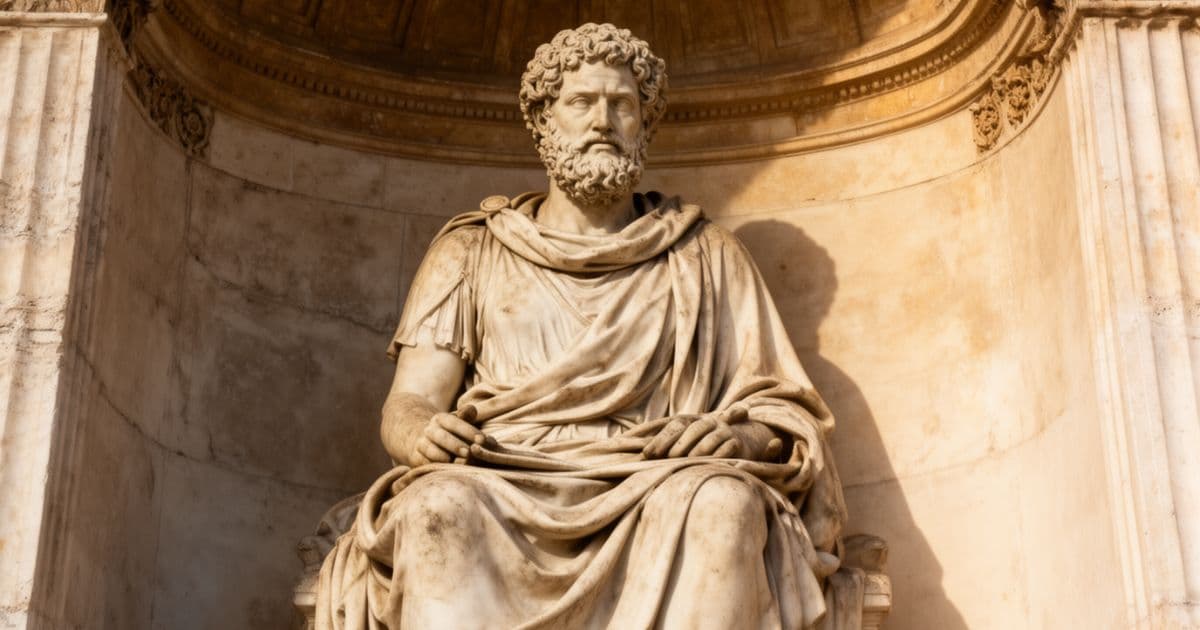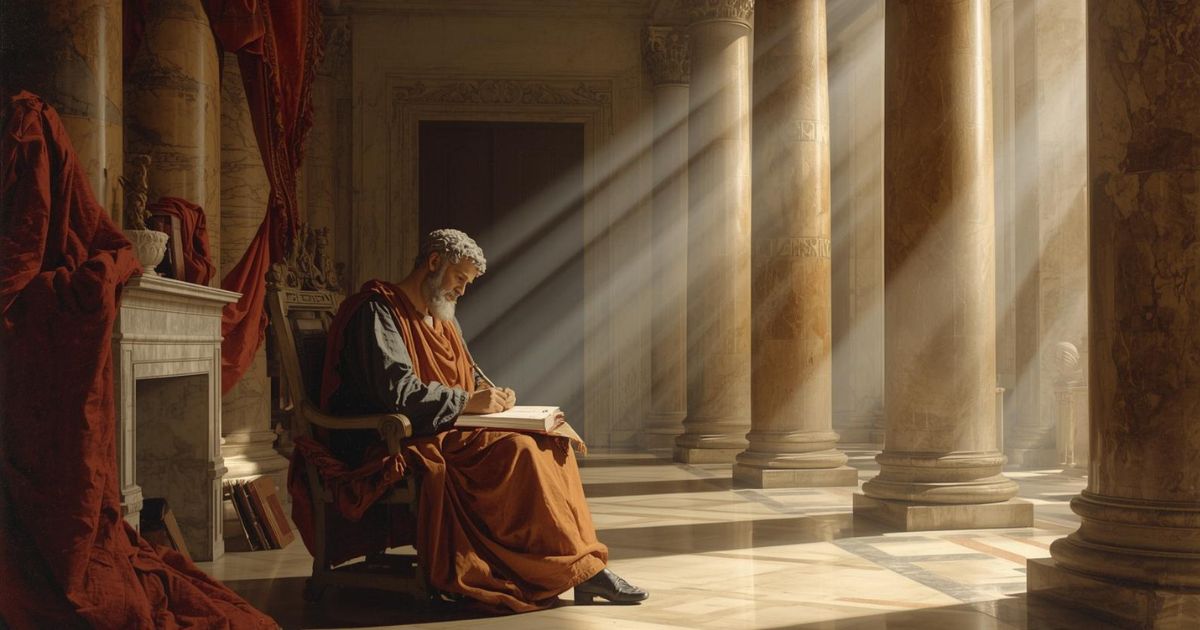
An excerpt from the original text.(complete · 877 words)
←etter 10. On living to oneselfMoral letters to Luciliusby Seneca, translated by Richard Mott GummereLetter 11. On the blush of modestyLetter 12. On old age→482847Moral letters to Lucilius — Letter 11. On the blush of modestyRichard Mott GummereSeneca XI. ON THE BLUSH OF MODESTY 1. Your friend and I have had a conversation. He is a man of ability; his very first words showed what spirit and understanding he possesses, and what progress he has already made. He gave me a foretaste, and he will not fail to answer thereto. For he spoke not from forethought, but was suddenly caught off his guard. When he tried to collect himself, he could scarcely banish that hue of modesty, which is a good sign in a young man; the blush that spread over his face seemed so to rise from the depths. And I feel sure that his habit of blushing will stay with him after he has strengthened his character, stripped off all his faults, and become wise. For by no wisdom can natural weaknesses of the body be removed. That which is implanted and inborn can be toned down by training, but not overcome. 2. The steadiest speaker, when before the public, often breaks into a perspiration, as if he had wearied or over-heated himself; some tremble in the knees when they rise to speak; I know of some whose teeth chatter, whose tongues falter, whose lips quiver. Training and experience can never shake off this habit; nature exerts her own power and through such a weakness makes her presence known even to the strongest. 3. I know that the blush, too, is a habit of this sort, spreading suddenly over the faces of the most dignified men. It is, indeed more prevalent in youth, because of the warmer blood and the sensitive countenance; nevertheless, both seasoned men and aged men are affected by it. Some are most dangerous when they redden, as if they were letting all their sense of shame escape. 4. Sulla, when the blood mantled his cheeks, was in his fiercest mood. Pompey had the most sensitive cast of countenance; he always blushed in the presence of a gathering, and especially at a public assembly. Fabianus also, I remember, reddened when he appeared as a witness before the senate; and his embarrassment became him to a remarkable degree. 5. Such a habit is not due to mental weakness, but to the novelty of a situation; an inexperienced person is not necessarily confused, but is usually affected, because he slips into this habit by natural tendency of the body. Just as certain men are full-blooded, so others are of a quick and mobile blood, that rushes to the face at once. 6. As I remarked, Wisdom can never remove this habit; for if she could rub out all our faults, she would be mistress of the universe. Whatever is assigned to us by the terms of our birth and the blend in our constitutions, will stick with us, no matter how hard or how long the soul may have tried to master itself. And we cannot forbid these feelings any more than we can summon them. 7. Actors in the theatre, who imitate the emotions, who portray fear and nervousness, who depict sorrow, imitate bashfulness by hanging their heads, lowering their voices, and keeping their eyes fixed and rooted upon the ground. They cannot, however, muster a blush; for the blush cannot be prevented or acquired. Wisdom will not assure us of a remedy, or give us help against it; it comes or goes unbidden, and is a law unto itself. 8. But my letter calls for its closing sentence. Hear and take to heart this useful and wholesome motto[1]: “Cherish some man of high character, and keep him ever before your eyes, living as if he were watching you, and ordering all your actions as if he beheld them.” 9. Such, my dear Lucilius, is the counsel of Epicurus;[2] he has quite properly given us a guardian and an attendant. We can get rid of most sins, if we have a witness who stands near us when we are likely to go wrong. The soul should have someone whom it can respect,—one by whose authority it may make even its inner shrine more hallowed.[3] Happy is the man who can make others better, not merely when he is in their company, but even when he is in their thoughts! And happy also is he who can so revere a man as to calm and regulate himself by calling him to mind! One who can so revere another, will soon be himself worthy of reverence. 10. Choose therefore a Cato; or, if Cato seems too severe a model, choose some Laelius, a gentler spirit. Choose a master whose life, conversation, and soul-expressing face have satisfied you; picture him always to yourself as your protector or your pattern. For we must indeed have someone according to whom we may regulate our characters; you can never straighten that which is crooked unless you use a ruler. Farewell. ↑ Epicurus, Frag. 210 Usener. ↑ Frag. 210 Usener. ↑ The figure is taken from the ἄδυτον, the Holy of Holies in a temple. Cf. Vergil, Aeneid, vi. 10 secreta Sibyllas.
Master this chapter. Complete your experience
Purchase the complete book to access all chapters and support classic literature
As an Amazon Associate, we earn a small commission from qualifying purchases at no additional cost to you.
Available in paperback, hardcover, and e-book formats
Let's Analyse the Pattern
We need external reference points to accurately judge our own behavior and choices.
Why This Matters
Connect literature to life
This chapter teaches how to build an internal system that keeps you honest when no one else is watching.
Practice This Today
This week, notice when you're about to make a choice you'd be embarrassed to explain to someone you respect—that's your cue to pause and reconsider.
Now let's explore the literary elements.
Key Quotes & Analysis
"For by no wisdom can natural weaknesses of the body be removed. That which is implanted and inborn can be toned down by training, but not overcome."
Context: Explaining why the young man's tendency to blush isn't something he should try to eliminate completely
This quote reveals Seneca's realistic approach to self-improvement. He's not promising that philosophy can make you into a completely different person, but rather that it can help you work with who you naturally are. It's both humble and hopeful - accepting limitations while still believing in growth.
In Today's Words:
Some things about yourself you just can't change, no matter how hard you work at it. You can get better at managing these traits, but they're part of who you are.
"Choose therefore a Cato; or, if Cato seems too severe a model, choose some Laelius, a gentler spirit."
Context: Advising Lucilius to pick a moral role model to guide his decisions
This quote shows Seneca's practical wisdom about moral development. He recognizes that different people need different types of role models - some respond to strict standards, others to gentler guidance. The key is having someone whose judgment you respect watching over your choices.
In Today's Words:
Pick someone you really respect to be your moral compass - whether that's someone who holds you to tough standards or someone who guides you with kindness.
"What progress, indeed, could I have made, had I not been able to share my counsels with a friend?"
Context: Reflecting on the value of having someone to discuss moral and philosophical questions with
This reveals that even the wise teacher needs companionship and conversation to grow. Seneca isn't presenting himself as having all the answers, but as someone who learns through relationship and dialogue. It makes philosophy collaborative rather than solitary.
In Today's Words:
I wouldn't have gotten anywhere in life without having good friends to talk things through with.
Thematic Threads
Self-Knowledge
In This Chapter
Seneca acknowledges that some aspects of ourselves (like blushing) are hardwired and unchangeable
Development
Building on earlier themes about accepting what we cannot control
In Your Life:
You might recognize that your anxiety response or quick temper is part of your wiring, not a moral failing
Personal Growth
In This Chapter
Using an imaginary mentor as a tool for moral development and better decision-making
Development
Evolving from passive acceptance to active strategies for improvement
In Your Life:
You could choose a respected figure to 'consult' mentally before making difficult choices
Social Expectations
In This Chapter
The young friend's blushing represents natural human responses to social judgment
Development
Continuing exploration of how we respond to others' opinions
In Your Life:
You might notice how your behavior changes when you feel observed versus when you're alone
Human Relationships
In This Chapter
The relationship between Seneca and his young friend shows mentorship and guidance
Development
Building on themes of learning from others and seeking wisdom
In Your Life:
You might identify people in your life whose judgment you value and could learn from
You now have the context. Time to form your own thoughts.
Discussion Questions
- 1
Why does Seneca say that blushing isn't something we can control, even if we're wise and experienced?
analysis • surface - 2
What's the real problem Seneca identifies with making decisions when we're alone and unobserved?
analysis • medium - 3
Think about your own behavior online versus in person, or when your boss is away versus present. Where do you see this pattern of changing standards?
application • medium - 4
If you had to choose someone—living, dead, or fictional—to be your 'internal referee' for tough decisions, who would it be and why?
application • deep - 5
What does this chapter suggest about the difference between accepting what we can't change versus improving what we can?
reflection • deep
Critical Thinking Exercise
Choose Your Internal Referee
Think of a recent decision you made when no one was watching—maybe how you treated a difficult customer, what you said about a coworker, or how you handled money. Write down what you did, then imagine explaining that choice to someone whose opinion you deeply respect. How would the conversation go? What would they say?
Consider:
- •Pick someone whose judgment genuinely matters to you, not just someone you think you should respect
- •Be honest about what you actually did, not what you wish you had done
- •Notice if imagining this conversation changes how you feel about your choice
Journaling Prompt
Write about a time when you acted differently because someone you respected was watching. What does this tell you about your own moral compass when you're alone?
Coming Up Next...
Chapter 12: Finding Joy in Life's Final Season
In the next letter, Seneca turns his attention to aging and the inevitable decline that comes with time. He visits his country estate and confronts the reality of buildings crumbling and his own mortality, leading to insights about how we should face the passage of years.