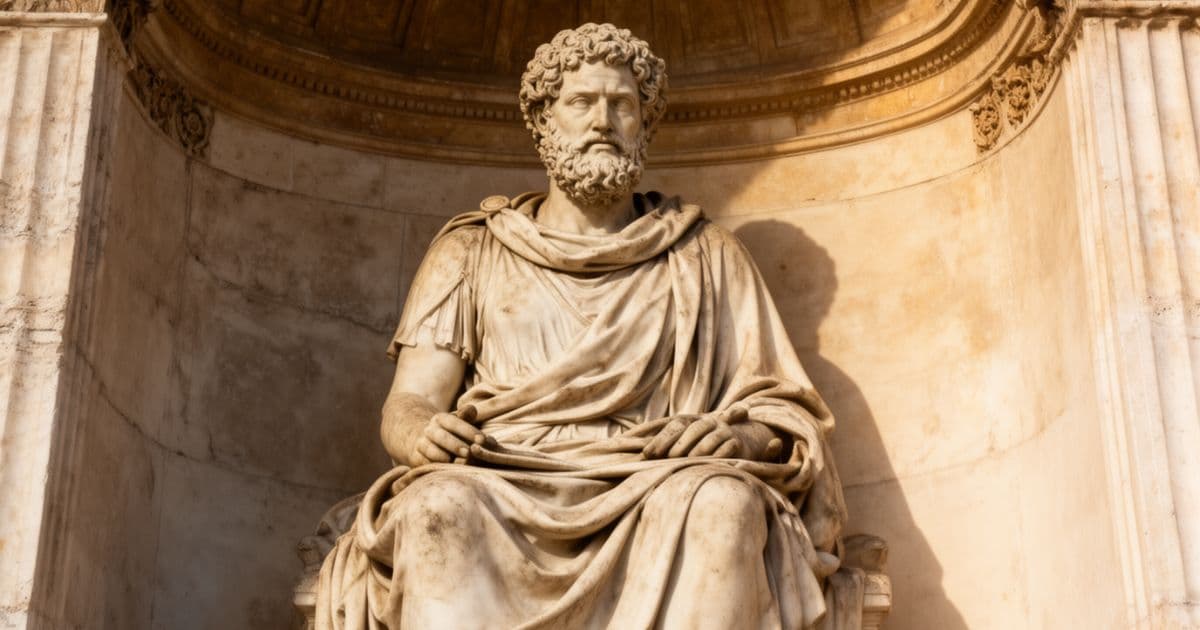
An excerpt from the original text.(complete · 187 words)
he condition and characteristic of a vulgar person is that he never
looks for either help or harm from himself, but only from externals. The
condition and characteristic of a philosopher is that he looks to himself
for all help or harm. The marks of a proficient are that he censures no
one, praises no one, blames no one, accuses no one; says nothing
concerning himself as being anybody or knowing anything. When he is in
any instance hindered or restrained, he accuses himself; and if he is
praised, he smiles to himself at the person who praises him; and if he is
censured, he makes no defense. But he goes about with the caution of a
convalescent, careful of interference with anything that is doing well
but not yet quite secure. He restrains desire; he transfers his aversion
to those things only which thwart the proper use of our own will; he
employs his energies moderately in all directions; if he appears stupid
or ignorant, he does not care; and, in a word, he keeps watch over
himself as over an enemy and one in ambush.
Master this chapter. Complete your experience
Purchase the complete book to access all chapters and support classic literature
As an Amazon Associate, we earn a small commission from qualifying purchases at no additional cost to you.
Available in paperback, hardcover, and e-book formats
Let's Analyse the Pattern
The pattern of basing your emotional state and self-worth on things outside your control rather than developing internal measures of success and peace.
Why This Matters
Connect literature to life
This chapter teaches how to separate your self-worth from external validation and outcomes.
Practice This Today
This week, notice when you seek validation or blame external factors, then ask 'What's actually within my control here?'
Now let's explore the literary elements.
Key Quotes & Analysis
"The condition and characteristic of a vulgar person is that he never looks for either help or harm from himself, but only from externals."
Context: Opening the chapter by defining what makes someone ordinary versus wise
This cuts to the heart of personal responsibility. Most people spend their lives trying to change their circumstances instead of changing their responses to circumstances.
In Today's Words:
Regular people always think their problems come from outside - their job, their family, their luck - never from their own choices.
"When he is in any instance hindered or restrained, he accuses himself."
Context: Describing how the advanced practitioner responds to obstacles
This doesn't mean self-blame or guilt, but taking ownership of your response. Instead of asking 'Why me?' they ask 'What can I do differently?'
In Today's Words:
When things go wrong, they look at what they could have done better instead of pointing fingers.
"He goes about with the caution of a convalescent, careful of interference with anything that is doing well but not yet quite secure."
Context: Explaining how the wise person moves through life
This beautiful metaphor shows that wisdom isn't about being tough or careless, but about being protective of your inner peace and progress.
In Today's Words:
They're careful about protecting their peace of mind, like someone protecting their health after being sick.
Thematic Threads
Personal Responsibility
In This Chapter
Taking ownership of your reactions and outcomes instead of blaming external circumstances or people
Development
Builds on earlier themes of focusing only on what's within your control
In Your Life:
You might notice this when you automatically blame your mood on other people's behavior instead of taking responsibility for your own responses.
Social Expectations
In This Chapter
The philosopher doesn't perform for others or seek external validation, appearing less impressive but achieving genuine peace
Development
Continues the theme of rejecting society's measures of success in favor of internal standards
In Your Life:
You might see this in how you choose what to post on social media or whether you need others to validate your choices.
Identity
In This Chapter
The contrast between those who define themselves through others' opinions versus those with internally-sourced identity
Development
Deepens the exploration of authentic self versus socially-constructed self
In Your Life:
You might recognize this when you feel differently about yourself based on whether people are praising or criticizing you.
Emotional Independence
In This Chapter
The advanced practitioner maintains inner peace regardless of external praise or criticism
Development
Introduced here as a new dimension of personal freedom
In Your Life:
You might notice this when your mood depends entirely on how your day went with other people rather than your own internal sense of accomplishment.
Class
In This Chapter
The philosopher may appear less impressive to others because they're not constantly performing or proving themselves
Development
Continues the theme that true wisdom often looks unremarkable to those judging by external standards
In Your Life:
You might see this when you feel pressure to appear successful or impressive rather than simply being competent and content.
You now have the context. Time to form your own thoughts.
Discussion Questions
- 1
According to Epictetus, what's the key difference between how ordinary people and philosophers respond when something goes wrong?
analysis • surface - 2
Why does constantly seeking external validation make someone emotionally unstable, even when they get the praise they want?
analysis • medium - 3
Think about your workplace or school - who do you know that gets defensive when questioned versus someone who asks 'What could I do differently?' How do others respond to each type?
application • medium - 4
If you practiced being your own scorekeeper for a month, what would change about how you handle criticism, praise, and setbacks?
application • deep - 5
What does this chapter suggest about the relationship between true strength and the need to prove yourself to others?
reflection • deep
Critical Thinking Exercise
Track Your Scorekeeper
For the next 24 hours, notice every time you look outside yourself for validation, blame, or emotional regulation. Keep a simple tally: when do you check social media for responses, when do you get upset because someone didn't meet your expectations, when do you feel good or bad based on someone else's reaction? Don't judge yourself - just observe the pattern.
Consider:
- •Pay attention to how often you refresh apps or check for responses
- •Notice when your mood shifts based on how others treat you
- •Observe the difference between asking 'What's wrong with them?' versus 'What could I do differently?'
Journaling Prompt
Write about one situation from your tracking where you caught yourself being an external scorekeeper. How would an internal scorekeeper have handled that same situation differently?
Coming Up Next...
Chapter 48: Knowledge Without Action Is Worthless
Epictetus turns his attention to intellectual vanity, warning against the trap of showing off knowledge rather than truly understanding wisdom. He'll explore why understanding complex ideas means nothing if you can't apply them to live better.