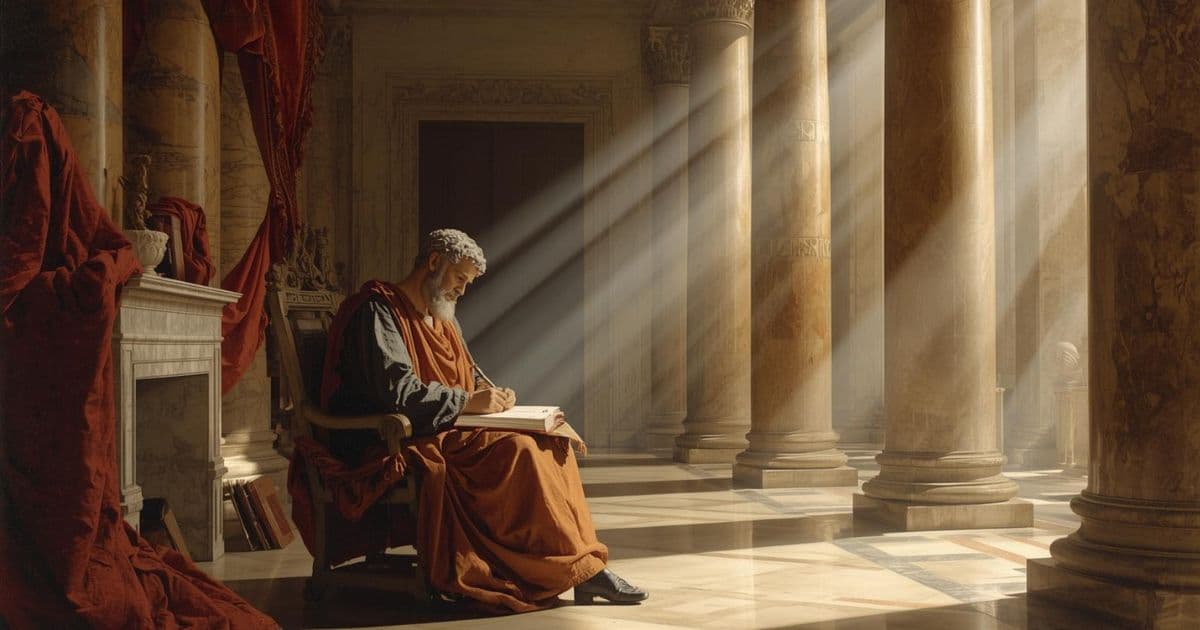
An excerpt from the original text.(complete · 130 words)
you wish your children and your wife and your friends to live forever,
you are foolish, for you wish things to be in your power which are not
so, and what belongs to others to be your own. So likewise, if you wish
your servant to be without fault, you are foolish, for you wish vice not
to be vice but something else. But if you wish not to be disappointed in
your desires, that is in your own power. Exercise, therefore, what is in
your power. A man’s master is he who is able to confer or remove whatever
that man seeks or shuns. Whoever then would be free, let him wish
nothing, let him decline nothing, which depends on others; else he must
necessarily be a slave.
Master this chapter. Complete your experience
Purchase the complete book to access all chapters and support classic literature
As an Amazon Associate, we earn a small commission from qualifying purchases at no additional cost to you.
Available in paperback, hardcover, and e-book formats
Let's Analyse the Pattern
We voluntarily enslave ourselves by making our peace dependent on controlling things that belong to other people's power, not ours.
Why This Matters
Connect literature to life
This chapter teaches how to identify what you can actually influence versus what depends on others' cooperation.
Practice This Today
This week, notice when you feel frustrated and ask: 'Am I trying to control something that isn't mine to control?' Then redirect that energy toward your actual sphere of influence.
Now let's explore the literary elements.
Key Quotes & Analysis
"If you wish your children and your wife and your friends to live forever, you are foolish, for you wish things to be in your power which are not so, and what belongs to others to be your own."
Context: Opening the chapter with a stark example of impossible desires
This hits hard because it names something we all secretly want but know is impossible. Epictetus isn't being cruel - he's showing how our deepest loves can become sources of suffering when we try to control what we can't control.
In Today's Words:
Wanting your family to never die or get hurt is understandable, but you're setting yourself up for heartbreak because that's not how life works.
"But if you wish not to be disappointed in your desires, that is in your own power."
Context: Offering the alternative to impossible wishes
This is the key insight - we can't control outcomes, but we can control whether we set ourselves up for disappointment. It's about aligning our expectations with reality rather than fighting against it.
In Today's Words:
You can't control what happens, but you can control whether you expect things that are likely to disappoint you.
"Whoever then would be free, let him wish nothing, let him decline nothing, which depends on others; else he must necessarily be a slave."
Context: Defining what true freedom looks like
This sounds extreme but it's about emotional freedom, not becoming a hermit. When your happiness depends on other people's choices, you've given them power over your peace of mind. True freedom means your well-being doesn't rise and fall with external circumstances.
In Today's Words:
If you want to be truly free, don't base your happiness on things other people control, or you'll always be at their mercy.
Thematic Threads
Control
In This Chapter
Epictetus draws the fundamental line between what we can and cannot control, showing how crossing this boundary creates suffering
Development
Building on earlier themes of accepting circumstances, now focusing specifically on the illusion of control over others
In Your Life:
You might recognize this when you're frustrated that others won't change to meet your expectations.
Freedom
In This Chapter
True freedom comes from wanting nothing that depends on others and avoiding nothing outside our power
Development
Expanding the concept of mental freedom from external circumstances to include freedom from other people's choices
In Your Life:
You experience this freedom when you stop needing others to behave a certain way for you to feel okay.
Relationships
In This Chapter
Loving others without the burden of impossible expectations - caring without controlling
Development
Introduced here as a new dimension of how Stoic principles apply to human connections
In Your Life:
You might see this in how you relate to family members whose choices you wish you could influence.
Personal Growth
In This Chapter
Growth requires examining daily frustrations to identify where we're trying to control the uncontrollable
Development
Deepening from general self-improvement to specific practices of recognizing control boundaries
In Your Life:
You can apply this by asking yourself what percentage of your stress comes from trying to change others.
Class
In This Chapter
The master-slave dynamic applies to anyone who makes their emotional state dependent on external validation or cooperation
Development
Extending beyond literal social class to psychological freedom available to anyone regardless of circumstances
In Your Life:
You might notice this when you feel powerless because your economic situation depends on others' decisions.
You now have the context. Time to form your own thoughts.
Discussion Questions
- 1
According to Epictetus, what's the fundamental difference between what we can control and what we can't control?
analysis • surface - 2
Why does Epictetus say we become 'enslaved' when we want things that depend on other people's choices?
analysis • medium - 3
Think about your last major frustration at work or home. Was it caused by trying to control something outside your power?
application • medium - 4
How could focusing only on your own responses change the way you handle difficult relationships?
application • deep - 5
What does this chapter reveal about why humans create so much unnecessary suffering for themselves?
reflection • deep
Critical Thinking Exercise
Map Your Borrowed Chains
List three current situations that stress you out. For each one, identify exactly what you're trying to control that isn't actually yours to control. Then rewrite each situation focusing only on what you can genuinely influence - your actions, responses, and choices. Notice how this shift changes your emotional relationship to the problem.
Consider:
- •Be honest about what you're really trying to control - often it's other people's feelings, choices, or timeline
- •Your actual power might be smaller than you think, but it's also more reliable than external control
- •Letting go of false control often reveals new options you couldn't see before
Journaling Prompt
Write about a relationship where you've been trying to control the other person's behavior. How would that relationship change if you focused only on controlling your own actions and responses?
Coming Up Next...
Chapter 15: The Banquet of Life
Epictetus shifts to a dinner party metaphor that reveals how to navigate life's opportunities and disappointments with grace. He'll show us how the same principles apply whether we're reaching for success or learning to let go of what passes us by.