
An excerpt from the original text.(complete · 3032 words)
e was out in his taxicab again the next morning, and by noon he had
secured what he wanted.
It was curiously significant that he worked so quickly. All the years
during which his wife had pressed him toward his present shift he had
sworn to himself, as well as to her, that he would never yield; and yet
when he did yield he had no plans to make, because he found them
already prepared and worked out in detail in his mind; as if he had long
contemplated the “step” he believed himself incapable of taking.
Sometimes he had thought of improving his income by exchanging his
little collection of bonds for a “small rental property,” if he could
find “a good buy”; and he had spent many of his spare hours rambling
over the enormously spreading city and its purlieus, looking for the
ideal “buy.” It remained unattainable, so far as he was concerned; but
he found other things.
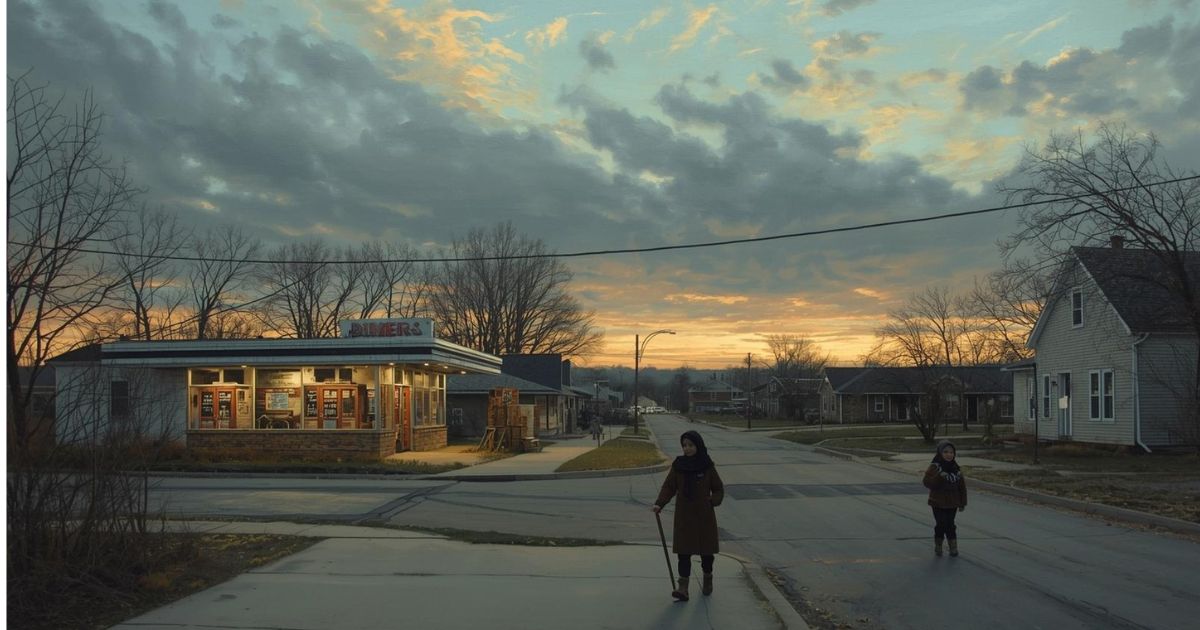
Not twice a crow's mile from his own house there was a dismal and
slummish quarter, a decayed “industrial district” of earlier days. Most
of the industries were small; some of them died, perishing of bankruptcy
or fire; and a few had moved, leaving their shells. Of the relics, the
best was a brick building which had been the largest and most important
factory in the quarter: it had been injured by a long vacancy almost
as serious as a fire, in effect, and Adams had often guessed at the sum
needed to put it in repair.
When he passed it, he would look at it with an interest which he
supposed detached and idly speculative. “That'd be just the thing,” he
thought. “If a fellow had money enough, and took a notion to set up some
new business on a big scale, this would be a pretty good place--to make
glue, for instance, if that wasn't out of the question, of course.
It would take a lot of money, though; a great deal too much for me to
expect to handle--even if I'd ever dream of doing such a thing.”
Opposite the dismantled factory was a muddy, open lot of two acres
or so, and near the middle of the lot, a long brick shed stood in
a desolate abandonment, not happily decorated by old coatings of
theatrical and medicinal advertisements. But the brick shed had two
wooden ells, and, though both shed and ells were of a single story, here
was empty space enough for a modest enterprise--“space enough for almost
anything, to start with,” Adams thought, as he walked through the low
buildings, one day, when he was prospecting in that section. “Yes, I
suppose I COULD swing this,” he thought. “If the process belonged to
me, say, instead of being out of the question because it isn't my
property--or if I was the kind of man to do such a thing anyhow, here
would be something I could probably get hold of pretty cheap. They'd
want a lot of money for a lease on that big building over the way--but
this, why, I should think it'd be practically nothing at all.”
Then, by chance, meeting an agent he knew, he made inquiries--merely to
satisfy a casual curiosity, he thought--and he found matters much as he
had supposed, except that the owners of the big building did not wish
to let, but to sell it, and this at a price so exorbitant that Adams
laughed. But the long brick shed in the great muddy lot was for sale or
to let, or “pretty near to be given away,” he learned, if anybody would
take it.
Adams took it now, though without seeing that he had been destined
to take it, and that some dreary wizard in the back of his head had
foreseen all along that he would take it, and planned to be ready. He
drove in his taxicab to look the place over again, then down-town to
arrange for a lease; and came home to lunch with his wife and daughter.
Things were “moving,” he told them.
He boasted a little of having acted so decisively, and said that since
the dang thing had to be done, it was “going to be done RIGHT!” He was
almost cheerful, in a feverish way, and when the cab came for him again,
soon after lunch, he explained that he intended not only to get things
done right, but also to “get 'em done quick!” Alice, following him to
the front door, looked at him anxiously and asked if she couldn't help.
He laughed at her grimly.
“Then let me go along with you in the cab,” she begged. “You don't look
able to start in so hard, papa, just when you're barely beginning to get
your strength back. Do let me go with you and see if I can't help--or at
least take care of you if you should get to feeling badly.”
He declined, but upon pressure let her put a tiny bottle of spirits of
ammonia in his pocket, and promised to make use of it if he “felt faint
or anything.” Then he was off again; and the next morning had men at
work in his sheds, though the wages he had to pay frightened him.
He directed the workmen in every detail, hurrying them by example and
exhortations, and receiving, in consequence, several declarations of
independence, as well as one resignation, which took effect immediately.
“Yous capitalusts seem to think a man's got nothin' to do but break his
back p'doosin' wealth fer yous to squander,” the resigning person loudly
complained. “You look out: the toiler's day is a-comin', and it ain't so
fur off, neither!” But the capitalist was already out of hearing, gone
to find a man to take this orator's place.
By the end of the week, Adams felt that he had moved satisfactorily
forward in his preparations for the simple equipment he needed; but
he hated the pause of Sunday. He didn't WANT any rest, he told Alice
impatiently, when she suggested that the idle day might be good for him.
Late that afternoon he walked over to the apartment house where old
Charley Lohr lived, and gave his friend the letter he wanted the head
of Lamb and Company to receive “personally.” “I'll take it as a mighty
great favour in you to hand it to him personally, Charley,” he said, in
parting. “And you won't forget, in case he says anything about it--and
remember if you ever do get a chance to put in a good word for me later,
you know----”
Old Charley promised to remember, and, when Mrs. Lohr came out of the
“kitchenette,” after the door closed, he said thoughtfully, “Just skin
and bones.”
“You mean Mr. Adams is?” Mrs. Lohr inquired.
“Who'd you think I meant?” he returned. “One o' these partridges in the
wall-paper?”
“Did he look so badly?”
“Looked kind of distracted to me,” her husband replied. “These little
thin fellers can stand a heap sometimes, though. He'll be over here
again Monday.”
“Did he say he would?”
“No,” said Lohr. “But he will. You'll see. He'll be over to find out
what the big boss says when I give him this letter. Expect I'd be kind
of anxious, myself, if I was him.”
“Why would you? What's Mr. Adams doing to be so anxious about?”
Lohr's expression became one of reserve, the look of a man who has
found that when he speaks his inner thoughts his wife jumps too far to
conclusions. “Oh, nothing,” he said. “Of course any man starting up a
new business is bound to be pretty nervous a while. He'll be over here
to-morrow evening, all right; you'll see.”
The prediction was fulfilled: Adams arrived just after Mrs. Lohr had
removed the dinner dishes to her “kitchenette”; but Lohr had little
information to give his caller.
“He didn't say a word, Virgil; nary a word. I took it into his office
and handed it to him, and he just sat and read it; that's all. I kind of
stood around as long as I could, but he was sittin' at his desk with his
side to me, and he never turned around full toward me, as it were, so I
couldn't hardly even tell anything. All I know: he just read it.”
“Well, but see here,” Adams began, nervously. “Well----”
“Well what, Virg?”
“Well, but what did he say when he DID speak?”
“He didn't speak. Not so long I was in there, anyhow. He just sat there
and read it. Read kind of slow. Then, when he came to the end, he turned
back and started to read it all over again. By that time there was three
or four other men standin' around in the office waitin' to speak to him,
and I had to go.”
Adams sighed, and stared at the floor, irresolute. “Well, I'll be
getting along back home then, I guess, Charley. So you're sure you
couldn't tell anything what he might have thought about it, then?”
“Not a thing in the world. I've told you all I know, Virg.”
“I guess so, I guess so,” Adams said, mournfully. “I feel mighty
obliged to you, Charley Lohr; mighty obliged. Good-night to you.” And he
departed, sighing in perplexity.
On his way home, preoccupied with many thoughts, he walked so slowly
that once or twice he stopped and stood motionless for a few moments,
without being aware of it; and when he reached the juncture of the
sidewalk with the short brick path that led to his own front door, he
stopped again, and stood for more than a minute. “Ah, I wish I knew,” he
whispered, plaintively. “I do wish I knew what he thought about it.”
He was roused by a laugh that came lightly from the little veranda near
by. “Papa!” Alice called gaily. “What are you standing there muttering
to yourself about?”
“Oh, are you there, dearie?” he said, and came up the path. A tall
figure rose from a chair on the veranda.
“Papa, this is Mr. Russell.”
The two men shook hands, Adams saying, “Pleased to make your
acquaintance,” as they looked at each other in the faint light diffused
through the opaque glass in the upper part of the door. Adams's
impression was of a strong and tall young man, fashionable but gentle;
and Russell's was of a dried, little old business man with a grizzled
moustache, worried bright eyes, shapeless dark clothes, and a homely
manner.
“Nice evening,” Adams said further, as their hands parted. “Nice time o'
year it is, but we don't always have as good weather as this; that's
the trouble of it. Well----” He went to the door. “Well--I bid you good
evening,” he said, and retired within the house.
Alice laughed. “He's the old-fashionedest man in town, I suppose and
frightfully impressed with you, I could see!”
“What nonsense!” said Russell. “How could anybody be impressed with me?”
“Why not? Because you're quiet? Good gracious! Don't you know that
you're the most impressive sort? We chatterers spend all our time
playing to you quiet people.”
“Yes; we're only the audience.”
“'Only!'” she echoed. “Why, we live for you, and we can't live without
you.”
“I wish you couldn't,” said Russell. “That would be a new experience for
both of us, wouldn't it?”
“It might be a rather bleak one for me,” she answered, lightly. “I'm
afraid I'll miss these summer evenings with you when they're over. I'll
miss them enough, thanks!”
“Do they have to be over some time?” he asked.
“Oh, everything's over some time, isn't it?”
Russell laughed at her. “Don't let's look so far ahead as that,” he
said. “We don't need to be already thinking of the cemetery, do we?”
“I didn't,” she said, shaking her head. “Our summer evenings will be
over before then, Mr. Russell.”
“Why?” he asked.
“Good heavens!” she said. “THERE'S laconic eloquence: almost a proposal
in a single word! Never mind, I shan't hold you to it. But to answer
you: well, I'm always looking ahead, and somehow I usually see about how
things are coming out.”
“Yes,” he said. “I suppose most of us do; at least it seems as if we
did, because we so seldom feel surprised by the way they do come out.
But maybe that's only because life isn't like a play in a theatre, and
most things come about so gradually we get used to them.”
“No, I'm sure I can see quite a long way ahead,” she insisted, gravely.
“And it doesn't seem to me as if our summer evenings could last very
long. Something'll interfere--somebody will, I mean--they'll SAY
something----”
“What if they do?”
She moved her shoulders in a little apprehensive shiver. “It'll change
you,” she said. “I'm just sure something spiteful's going to happen to
me. You'll feel differently about--things.”
“Now, isn't that an idea!” he exclaimed.
“It will,” she insisted. “I know something spiteful's going to happen!”
“You seem possessed by a notion not a bit flattering to me,” he
remarked.
“Oh, but isn't it? That's just what it is! Why isn't it?”
“Because it implies that I'm made of such soft material the slightest
breeze will mess me all up. I'm not so like that as I evidently appear;
and if it's true that we're afraid other people will do the things we'd
be most likely to do ourselves, it seems to me that I ought to be the
one to be afraid. I ought to be afraid that somebody may say something
about me to you that will make you believe I'm a professional forger.”
“No. We both know they won't,” she said. “We both know you're the sort
of person everybody in the world says nice things about.” She lifted
her hand to silence him as he laughed at this. “Oh, of course you are! I
think perhaps you're a little flirtatious--most quiet men have that one
sly way with 'em--oh, yes, they do! But you happen to be the kind of
man everybody loves to praise. And if you weren't, I shouldn't hear
anything terrible about you. I told you I was unpopular: I don't see
anybody at all any more. The only man except you who's been to see me in
a month is that fearful little fat Frank Dowling, and I sent word to HIM
I wasn't home. Nobody'd tell me of your wickedness, you see.”
“Then let me break some news to you,” Russell said. “Nobody would tell
me of yours, either. Nobody's even mentioned you to me.”
She burlesqued a cry of anguish. “That IS obscurity! I suppose I'm
too apt to forget that they say the population's about half a million
nowadays. There ARE other people to talk about, you feel, then?”
“None that I want to,” he said. “But I should think the size of the
place might relieve your mind of what seems to insist on burdening it.
Besides, I'd rather you thought me a better man than you do.”
“What kind of a man do I think you are?”
“The kind affected by what's said about people instead of by what they
do themselves.”
“Aren't you?”
“No, I'm not,” he said. “If you want our summer evenings to be over
you'll have to drive me away yourself.”
“Nobody else could?”
“No.”
She was silent, leaning forward, with her elbows on her knees and her
clasped hands against her lips. Then, not moving, she said softly:
“Well--I won't!”
She was silent again, and he said nothing, but looked at her, seeming
to be content with looking. Her attitude was one only a graceful person
should assume, but she was graceful; and, in the wan light, which made
a prettily shaped mist of her, she had beauty. Perhaps it was beauty of
the hour, and of the love scene almost made into form by what they had
both just said, but she had it; and though beauty of the hour passes, he
who sees it will long remember it and the hour when it came.
“What are you thinking of?” he asked.
She leaned back in her chair and did not answer at once. Then she said:
“I don't know; I doubt if I was thinking of anything. It seems to me I
wasn't. I think I was just being sort of sadly happy just then.”
“Were you? Was it 'sadly,' too?”
“Don't you know?” she said. “It seems to me that only little children
can be just happily happy. I think when we get older our happiest
moments are like the one I had just then: it's as if we heard strains of
minor music running through them--oh, so sweet, but oh, so sad!”
“But what makes it sad for YOU?”
“I don't know,” she said, in a lighter tone. “Perhaps it's a kind of
useless foreboding I seem to have pretty often. It may be that--or it
may be poor papa.”
“You ARE a funny, delightful girl, though!” Russell laughed. “When your
father's so well again that he goes out walking in the evenings!”
“He does too much walking,” Alice said. “Too much altogether, over at
his new plant. But there isn't any stopping him.” She laughed and shook
her head. “When a man gets an ambition to be a multi-millionaire his
family don't appear to have much weight with him. He'll walk all he
wants to, in spite of them.”
“I suppose so,” Russell said, absently; then he leaned forward. “I wish
I could understand better why you were 'sadly' happy.”
Meanwhile, as Alice shed what further light she could on this point, the
man ambitious to be a “multi-millionaire” was indeed walking too much
for his own good. He had gone to bed, hoping to sleep well and rise
early for a long day's work, but he could not rest, and now, in his
nightgown and slippers, he was pacing the floor of his room.
“I wish I DID know,” he thought, over and over. “I DO wish I knew how he
feels about it.”
Master this chapter. Complete your experience
Purchase the complete book to access all chapters and support classic literature
As an Amazon Associate, we earn a small commission from qualifying purchases at no additional cost to you.
Available in paperback, hardcover, and e-book formats
Let's Analyse the Pattern
The illusion that taking decisive action gives us control, when it often just changes what we're powerless over.
Why This Matters
Connect literature to life
This chapter teaches how to distinguish between real agency and the frantic activity that masks powerlessness.
Practice This Today
This week, notice when you're working harder to control outcomes versus working smarter to influence what's actually within your power.
Now let's explore the literary elements.
Key Quotes & Analysis
"It was curiously significant that he worked so quickly. All the years during which his wife had pressed him toward his present shift he had sworn to himself, as well as to her, that he would never yield; and yet when he did yield he had no plans to make, because he found them already prepared and worked out in detail in his mind."
Context: Describing how Adams suddenly moves fast on starting his business after years of resistance
This reveals the psychology of major life changes - we often resist what we're already planning. Adams' quick action shows he'd been unconsciously preparing for this move while consciously fighting it.
In Today's Words:
He'd been telling everyone he'd never quit his job, but when he finally did, he already knew exactly what to do - because he'd been thinking about it all along.
"Something's sure to spoil it all, but it's lovely now."
Context: Thinking about her evenings with Russell on the porch
Alice can't enjoy present happiness without expecting future disaster. This defensive pessimism protects her from disappointment but also prevents her from fully experiencing joy.
In Today's Words:
This is too good to last, but I'll enjoy it while I can.
"He found himself continually glancing toward the window that looked in the direction of his old place of business, as if he expected to see some sign of what his former employer thought of the letter he had sent."
Context: Adams obsessing over his former boss's reaction to his resignation
Even after making his bold move toward independence, Adams is still mentally tethered to his old job. This shows how difficult it is to truly break free from situations that defined us.
In Today's Words:
He kept checking to see if his old boss was talking about him, like stalking an ex on social media.
Thematic Threads
Control
In This Chapter
Adams frantically micromanages his new business while obsessing over his former boss's reaction
Development
Evolved from his earlier passive acceptance to active but misdirected control attempts
In Your Life:
You might recognize this when you make a big change but find yourself more anxious, not less.
Class Anxiety
In This Chapter
The run-down brick shed represents Adams's fall from middle-class respectability to industrial struggle
Development
Deepened from earlier social climbing attempts to actual class mobility fears
In Your Life:
You see this when taking financial risks feels like risking your entire social identity.
Unconscious Preparation
In This Chapter
Adams's 'idle' walks were actually reconnaissance missions for his future business location
Development
Introduced here as explanation for his sudden decisiveness
In Your Life:
You might notice your mind has been preparing for changes you're not consciously ready to make.
Fatalism
In This Chapter
Alice predicts something will go wrong despite her happiness with Russell
Development
New defensive mechanism emerging from her family's ongoing struggles
In Your Life:
You might catch yourself sabotaging good things because you don't believe you deserve them.
Transition Costs
In This Chapter
Adams loses sleep and drives away workers in his desperate attempt to succeed
Development
Introduced here as the hidden price of his 'freedom'
In Your Life:
You see this when major life changes bring unexpected emotional and physical tolls.
You now have the context. Time to form your own thoughts.
Discussion Questions
- 1
Adams moves with surprising speed once he decides to start his business, but why does his decisiveness actually reveal how powerless he feels?
analysis • surface - 2
Why does Adams obsess over his former boss's reaction to his resignation letter instead of focusing on his new business?
analysis • medium - 3
Where do you see this pattern today—people making big life changes but then losing control in unexpected ways?
application • medium - 4
When you've made a major decision, what's the difference between controlling what you can versus trying to control what you can't?
application • deep - 5
Alice predicts something will go wrong because she doesn't believe happiness lasts. Is this wisdom or self-sabotage?
reflection • deep
Critical Thinking Exercise
Map Your Control Zones
Think of a major decision you're considering or recently made. Draw three circles: what you can fully control, what you can influence but not control, and what's completely outside your power. Notice where you're spending most of your mental energy—is it in the right circle?
Consider:
- •Your energy follows your attention—where are you focusing?
- •Anxiety often lives in the 'influence but can't control' zone
- •The most productive action happens in your full control circle
Journaling Prompt
Write about a time when you made a big change but then obsessed over something you couldn't control. What would you do differently now?
Coming Up Next...
Chapter 18: The Weight of Guilty Conscience
Adams's obsession with his former boss's reaction intensifies as days pass without word. His relentless work pace and constant worry begin taking a visible toll, while the weight of his decision grows heavier with each passing day.



