
An excerpt from the original text.(complete · 3542 words)
lice had said that no one who knew either Russell or herself would be
likely to see them in the park or upon the dingy street; but although
they returned by that same ungenteel thoroughfare they were seen by
a person who knew them both. Also, with some surprise on the part of
Russell, and something more poignant than surprise for Alice, they saw
this person.
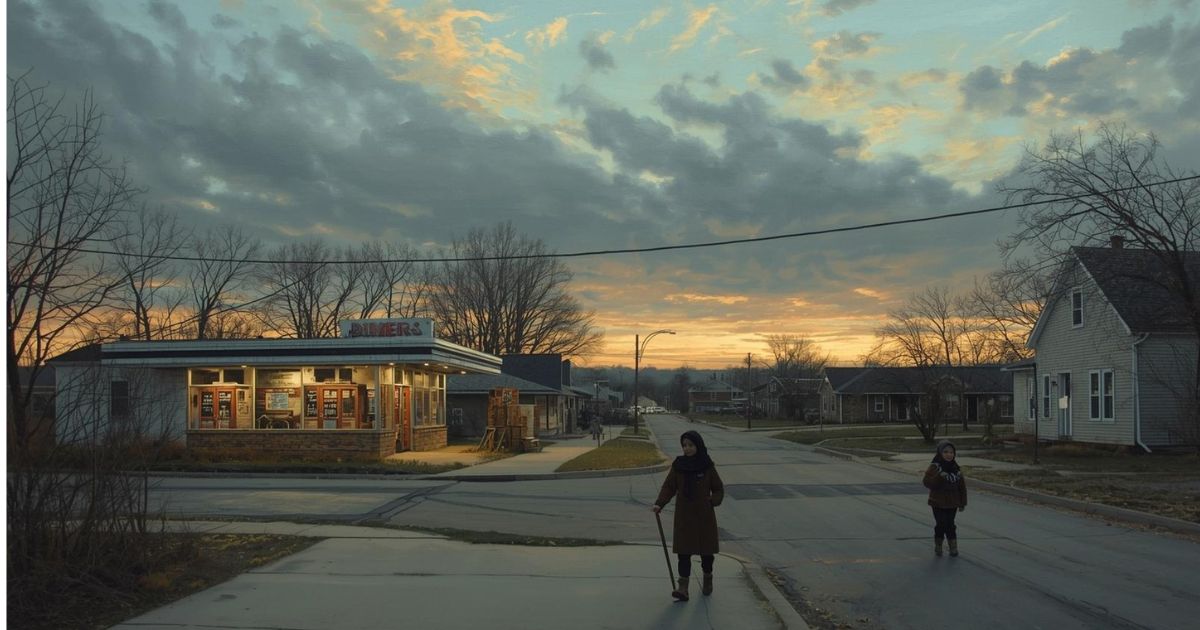
All of the dingy street was ugly, but the greater part of it appeared to
be honest. The two pedestrians came upon a block or two, however, where
it offered suggestions of a less upright character, like a steady enough
workingman with a naughty book sticking out of his pocket. Three or four
dim shops, a single story in height, exhibited foul signboards, yet fair
enough so far as the wording went; one proclaiming a tobacconist, one
a junk-dealer, one a dispenser of “soft drinks and cigars.” The most
credulous would have doubted these signboards; for the craft of the
modern tradesman is exerted to lure indoors the passing glance, since if
the glance is pleased the feet may follow; but this alleged tobacconist
and his neighbours had long been fond of dust on their windows,
evidently, and shades were pulled far down on the glass of their doors.
Thus the public eye, small of pupil in the light of the open street, was
intentionally not invited to the dusky interiors. Something different
from mere lack of enterprise was apparent; and the signboards might have
been omitted; they were pains thrown away, since it was plain to the
world that the business parts of these shops were the brighter back
rooms implied by the dark front rooms; and that the commerce there was
in perilous new liquors and in dice and rough girls.
Nothing could have been more innocent than the serenity with which these
wicked little places revealed themselves for what they were; and, bound
by this final tie of guilelessness, they stood together in a row which
ended with a companionable barbershop, much like them. Beyond was a
series of soot-harried frame two-story houses, once part of a cheerful
neighbourhood when the town was middle-aged and settled, and not old and
growing. These houses, all carrying the label. “Rooms,” had the worried
look of vacancy that houses have when they are too full of everybody
without being anybody's home; and there was, too, a surreptitious
air about them, as if, like the false little shops, they advertised
something by concealing it.
One of them--the one next to the barber-shop--had across its front an
ample, jig-sawed veranda, where aforetime, no doubt, the father of a
family had fanned himself with a palm-leaf fan on Sunday afternoons,
watching the surreys go by, and where his daughter listened to mandolins
and badinage on starlit evenings; but, although youth still held the
veranda, both the youth and the veranda were in decay. The four or five
young men who lounged there this afternoon were of a type known to shady
pool-parlours. Hats found no favour with them; all of them wore caps;
and their tight clothes, apparently from a common source, showed
a vivacious fancy for oblique pockets, false belts, and Easter-egg
colourings. Another thing common to the group was the expression of
eye and mouth; and Alice, in the midst of her other thoughts, had a
distasteful thought about this.
The veranda was within a dozen feet of the sidewalk, and as she and her
escort came nearer, she took note of the young men, her face hardening
a little, even before she suspected there might be a resemblance between
them and any one she knew. Then she observed that each of these loungers
wore not for the occasion, but as of habit, a look of furtively
amused contempt; the mouth smiled to one side as if not to dislodge a
cigarette, while the eyes kept languidly superior. All at once Alice was
reminded of Walter; and the slight frown caused by this idea had just
begun to darken her forehead when Walter himself stepped out of the open
door of the house and appeared upon the veranda. Upon his head was a new
straw hat, and in his hand was a Malacca stick with an ivory top, for
Alice had finally decided against it for herself and had given it to
him. His mood was lively: he twirled the stick through his fingers like
a drum-major's baton, and whistled loudly.
Moreover, he was indeed accompanied. With him was a thin girl who had
made a violent black-and-white poster of herself: black dress, black
flimsy boa, black stockings, white slippers, great black hat down upon
the black eyes; and beneath the hat a curve of cheek and chin made white
as whitewash, and in strong bilateral motion with gum.
The loungers on the veranda were familiars of the pair; hailed them with
cacklings; and one began to sing, in a voice all tin:
“Then my skirt, Sal, and me did go
Right straight to the moving-pitcher show.
OH, you bashful vamp!”
The girl laughed airily. “God, but you guys are wise!” she said.
“Come on, Wallie.”
Walter stared at his sister; then grinned faintly, and nodded at Russell
as the latter lifted his hat in salutation. Alice uttered an incoherent
syllable of exclamation, and, as she began to walk faster, she bit her
lip hard, not in order to look wistful, this time, but to help her keep
tears of anger from her eyes.
Russell laughed cheerfully. “Your brother certainly seems to have found
the place for 'colour' today,” he said. “That girl's talk must be full
of it.”
But Alice had forgotten the colour she herself had used in accounting
for Walter's peculiarities, and she did not understand. “What?” she
said, huskily.
“Don't you remember telling me about him? How he was going to write,
probably, and would go anywhere to pick up types and get them to talk?”
She kept her eyes ahead, and said sharply, “I think his literary tastes
scarcely cover this case!”
“Don't be too sure. He didn't look at all disconcerted. He didn't seem
to mind your seeing him.”
“That's all the worse, isn't it?”
“Why, no,” her friend said, genially. “It means he didn't consider
that he was engaged in anything out of the way. You can't expect to
understand everything boys do at his age; they do all sorts of queer
things, and outgrow them. Your brother evidently has a taste for queer
people, and very likely he's been at least half sincere when he's made
you believe he had a literary motive behind it. We all go through----”
“Thanks, Mr. Russell,” she interrupted. “Let's don't say any more.”
He looked at her flushed face and enlarged eyes; and he liked her all
the better for her indignation: this was how good sisters ought to feel,
he thought, failing to understand that most of what she felt was not
about Walter. He ventured only a word more. “Try not to mind it so much;
it really doesn't amount to anything.”
She shook her head, and they went on in silence; she did not look at him
again until they stopped before her own house. Then she gave him only
one glimpse of her eyes before she looked down. “It's spoiled, isn't
it?” she said, in a low voice.
“What's 'spoiled?'”
“Our walk--well, everything. Somehow it always--is.”
“'Always is' what?” he asked.
“Spoiled,” she said.
He laughed at that; but without looking at him she suddenly offered him
her hand, and, as he took it, he felt a hurried, violent pressure upon
his fingers, as if she meant to thank him almost passionately for being
kind. She was gone before he could speak to her again.
In her room, with the door locked, she did not go to her mirror, but to
her bed, flinging herself face down, not caring how far the pillows
put her hat awry. Sheer grief had followed her anger; grief for
the calamitous end of her bright afternoon, grief for the “end of
everything,” as she thought then. Nevertheless, she gradually grew more
composed, and, when her mother tapped on the door presently, let her in.
Mrs. Adams looked at her with quick apprehension.
“Oh, poor child! Wasn't he----”
Alice told her. “You see how it--how it made me look, mama,” she
quavered, having concluded her narrative. “I'd tried to cover up
Walter's awfulness at the dance with that story about his being
'literary,' but no story was big enough to cover this up--and oh! it
must make him think I tell stories about other things!”
“No, no, no!” Mrs. Adams protested. “Don't you see? At the worst, all HE
could think is that Walter told stories to you about why he likes to be
with such dreadful people, and you believed them. That's all HE'D think;
don't you see?”
Alice's wet eyes began to show a little hopefulness. “You honestly think
it might be that way, mama?”
“Why, from what you've told me he said, I KNOW it's that way. Didn't he
say he wanted to come again?”
“N-no,” Alice said, uncertainly. “But I think he will. At least I begin
to think so now. He----” She stopped.
“From all you tell me, he seems to be a very desirable young man,” Mrs.
Adams said, primly.
Her daughter was silent for several moments; then new tears gathered
upon her downcast lashes. “He's just--dear!” she faltered.
Mrs. Adams nodded. “He's told you he isn't engaged, hasn't he?”
“No. But I know he isn't. Maybe when he first came here he was near it,
but I know he's not.”
“I guess Mildred Palmer would LIKE him to be, all right!” Mrs. Adams
was frank enough to say, rather triumphantly; and Alice, with a lowered
head, murmured:
“Anybody--would.”
The words were all but inaudible.
“Don't you worry,” her mother said, and patted her on the shoulder.
“Everything will come out all right; don't you fear, Alice. Can't you
see that beside any other girl in town you're just a perfect QUEEN? Do
you think any young man that wasn't prejudiced, or something, would need
more than just one look to----”
But Alice moved away from the caressing hand. “Never mind, mama. I
wonder he looks at me at all. And if he does again, after seeing my
brother with those horrible people----”
“Now, now!” Mrs. Adams interrupted, expostulating mournfully. “I'm sure
Walter's a GOOD boy----”
“You are?” Alice cried, with a sudden vigour. “You ARE?”
“I'm sure he's GOOD, yes--and if he isn't, it's not his fault. It's
mine.”
“What nonsense!”
“No, it's true,” Mrs. Adams lamented. “I tried to bring him up to be
good, God knows; and when he was little he was the best boy I ever saw.
When he came from Sunday-school he'd always run to me and we'd go over
the lesson together; and he let me come in his room at night to hear his
prayers almost until he was sixteen. Most boys won't do that with
their mothers--not nearly that long. I tried so hard to bring him up
right--but if anything's gone wrong it's my fault.”
“How could it be? You've just said----”
“It's because I didn't make your father this--this new step earlier.
Then Walter might have had all the advantages that other----”
“Oh, mama, PLEASE!” Alice begged her. “Let's don't go over all that
again. Isn't it more important to think what's to be done about him? Is
he going to be allowed to go on disgracing us as he does?”
Mrs. Adams sighed profoundly. “I don't know what to do,” she confessed,
unhappily. “Your father's so upset about--about this new step he's
taking--I don't feel as if we ought to----”
“No, no!” Alice cried. “Papa mustn't be distressed with this, on top of
everything else. But SOMETHING'S got to be done about Walter.”
“What can be?” her mother asked, helplessly. “What can be?”
Alice admitted that she didn't know.
At dinner, an hour later, Walter's habitually veiled glance lifted,
now and then, to touch her furtively;--he was waiting, as he would have
said, for her to “spring it”; and he had prepared a brief and sincere
defense to the effect that he made his own living, and would like
to inquire whose business it was to offer intrusive comment upon his
private conduct. But she said nothing, while his father and mother were
as silent as she. Walter concluded that there was to be no attack, but
changed his mind when his father, who ate only a little, and broodingly
at that, rose to leave the table and spoke to him.
“Walter,” he said, “when you've finished I wish you'd come up to my
room. I got something I want to say to you.”
Walter shot a hard look at his apathetic sister, then turned to his
father. “Make it to-morrow,” he said. “This is Satad'y night and I got a
date.”
“No,” Adams said, frowning. “You come up before you go out. It's
important.”
“All right; I've had all I want to eat,” Walter returned. “I got a few
minutes. Make it quick.”
He followed his father upstairs, and when they were in the room together
Adams shut the door, sat down, and began to rub his knees.
“Rheumatism?” the boy inquired, slyly. “That what you want to talk to me
about?”
“No.” But Adams did not go on; he seemed to be in difficulties for
words, and Walter decided to help him.
“Hop ahead and spring it,” he said. “Get it off your mind: I'll tell the
world I should worry! You aren't goin' to bother ME any, so why bother
yourself? Alice hopped home and told you she saw me playin' around with
some pretty gay-lookin' berries and you----”
“Alice?” his father said, obviously surprised. “It's nothing about
Alice.”
“Didn't she tell you----”
“I haven't talked with her all day.”
“Oh, I see,” Walter said. “She told mother and mother told you.”
“No, neither of 'em have told me anything. What was there to tell?”
Walter laughed. “Oh, it's nothin',” he said. “I was just startin' out
to buy a girl friend o' mine a rhinestone buckle I lost to her on a bet,
this afternoon, and Alice came along with that big Russell fish; and I
thought she looked sore. She expects me to like the kind she likes, and
I don't like 'em. I thought she'd prob'ly got you all stirred up about
it.”
“No, no,” his father said, peevishly. “I don't know anything about it,
and I don't care to know anything about it. I want to talk to you about
something important.”
Then, as he was again silent, Walter said, “Well, TALK about it; I'm
listening.”
“It's this,” Adams began, heavily. “It's about me going into this glue
business. Your mother's told you, hasn't she?”
“She said you were goin' to leave the old place down-town and start a
glue factory. That's all I know about it; I got my own affairs to 'tend
to.”
“Well, this is your affair,” his father said, frowning. “You can't stay
with Lamb and Company.”
Walter looked a little startled. “What you mean, I can't? Why not?”
“You've got to help me,” Adams explained slowly; and he frowned more
deeply, as if the interview were growing increasingly laborious for him.
“It's going to be a big pull to get this business on its feet.”
“Yes!” Walter exclaimed with a sharp skepticism. “I should say it was!”
He stared at his father incredulously. “Look here; aren't you just a
little bit sudden, the way you're goin' about things? You've let mother
shove you a little too fast, haven't you? Do you know anything about
what it means to set up a new business these days?”
“Yes, I know all about it,” Adams said. “About this business, I do.”
“How do you?”
“Because I made a long study of it. I'm not afraid of going about it the
wrong way; but it's a hard job and you'll have to put in all whatever
sense and strength you've got.”
Walter began to breathe quickly, and his lips were agitated; then he set
them obstinately. “Oh; I will,” he said.
“Yes, you will,” Adams returned, not noticing that his son's inflection
was satiric. “It's going to take every bit of energy in your body, and
all the energy I got left in mine, and every cent of the little I've
saved, besides something I'll have to raise on this house. I'm going
right at it, now I've got to; and you'll have to quit Lamb's by the end
of next week.”
“Oh, I will?” Walter's voice grew louder, and there was a shrillness
in it. “I got to quit Lamb's the end of next week, have I?” He stepped
forward, angrily. “Listen!” he said. “I'm not walkin' out o' Lamb's,
see? I'm not quittin' down there: I stay with 'em, see?”
Adams looked up at him, astonished. “You'll leave there next Saturday,”
he said. “I've got to have you.”
“You don't anything o' the kind,” Walter told him, sharply. “Do you
expect to pay me anything?”
“I'd pay you about what you been getting down there.”
“Then pay somebody else; I don't know anything about glue. You get
somebody else.”
“No. You've got to---”
Walter cut him off with the utmost vehemence. “Don't tell me what I got
to do! I know what I got to do better'n you, I guess! I stay at Lamb's,
see?”
Adams rose angrily. “You'll do what I tell you. You can't stay down
there.”
“Why can't I?”
“Because I won't let you.”
“Listen! Keep on not lettin' me: I'll be there just the same.”
At that his father broke into a sour laughter. “THEY won't let you,
Walter! They won't have you down there after they find out I'm going.”
“Why won't they? You don't think they're goin' to be all shot to pieces
over losin' YOU, do you?”
“I tell you they won't let you stay,” his father insisted, loudly.
“Why, what do they care whether you go or not?”
“They'll care enough to fire YOU, my boy!”
“Look here, then; show me why.”
“They'll do it!”
“Yes,” Walter jeered; “you keep sayin' they will, but when I ask you to
show me why, you keep sayin' they will! That makes little headway with
ME, I can tell you!”
Adams groaned, and, rubbing his head, began to pace the floor. Walter's
refusal was something he had not anticipated; and he felt the weakness
of his own attempt to meet it: he seemed powerless to do anything but
utter angry words, which, as Walter said, made little headway. “Oh, my,
my!” he muttered, “OH, my, my!”
Walter, usually sallow, had grown pale: he watched his father narrowly,
and now took a sudden resolution. “Look here,” he said. “When you say
Lamb's is likely to fire me because you're goin' to quit, you talk like
the people that have to be locked up. I don't know where you get such
things in your head; Lamb and Company won't know you're gone. Listen: I
can stay there long as I want to. But I'll tell you what I'll do: make
it worth my while and I'll hook up with your old glue factory, after
all.”
Adams stopped his pacing abruptly, and stared at him. “'Make it worth
your while?' What you mean?”
“I got a good use for three hundred dollars right now,” Walter said.
“Let me have it and I'll quit Lamb's to work for you. Don't let me have
it and I SWEAR I won't!”
“Are you crazy?”
“Is everybody crazy that needs three hundred dollars?”
“Yes,” Adams said. “They are if they ask ME for it, when I got to
stretch every cent I can lay my hands on to make it look like a dollar!”
“You won't do it?”
Adams burst out at him. “You little fool! If I had three hundred dollars
to throw away, besides the pay I expected to give you, haven't you got
sense enough to see I could hire a man worth three hundred dollars
more to me than you'd be? It's a FINE time to ask me for three hundred
dollars, isn't it! What FOR? Rhinestone buckles to throw around on your
'girl friends?' Shame on you! Ask me to BRIBE you to help yourself and
your own family!”
“I'll give you a last chance,” Walter said. “Either you do what I want,
or I won't do what you want. Don't ask me again after this, because----”
Adams interrupted him fiercely. “'Ask you again!' Don't worry about
that, my boy! All I ask you is to get out o' my room.”
“Look here,” Walter said, quietly; and his lopsided smile distorted his
livid cheek. “Look here: I expect YOU wouldn't give me three hundred
dollars to save my life, would you?”
“You make me sick,” Adams said, in his bitterness. “Get out of here.”
Walter went out, whistling; and Adams drooped into his old chair again
as the door closed. “OH, my, my!” he groaned. “Oh, Lordy, Lordy! The way
of the transgressor----”
Master this chapter. Complete your experience
Purchase the complete book to access all chapters and support classic literature
As an Amazon Associate, we earn a small commission from qualifying purchases at no additional cost to you.
Available in paperback, hardcover, and e-book formats
Let's Analyse the Pattern
The illusion that we can indefinitely control damaging information while building our future on that control.
Why This Matters
Connect literature to life
This chapter teaches how to identify when family members or close associates use your vulnerabilities and desperation as leverage against you.
Practice This Today
This week, notice when someone's cooperation comes with increasingly expensive conditions—that's usually emotional extortion disguised as negotiation.
Now let's explore the literary elements.
Key Quotes & Analysis
"Something different from mere lack of enterprise was apparent; and the signboards might as well have been frank, and proclaimed themselves what they were."
Context: Describing the suspicious businesses on the seedy street where Alice and Russell encounter Walter
This sets up the theme of false appearances versus reality that dominates the chapter. Just as these businesses hide their true nature, Alice has been hiding her family's true circumstances from Russell.
In Today's Words:
These weren't just run-down shops - they were obviously fronts for something shady.
"Well, I expect to be paid something for my time if I'm going into any business."
Context: When his father asks him to quit his job and join the family glue business
Walter's mercenary response reveals his complete lack of family loyalty. He treats his family's desperation as a business opportunity rather than a crisis requiring sacrifice.
In Today's Words:
If you want my help, you're going to have to pay me for it.
"Alice knew that all was over."
Context: After Russell witnesses Walter with his disreputable associates
This moment of devastating clarity shows Alice recognizing that her social climbing efforts have been destroyed by circumstances beyond her control. Her family's reality has shattered her carefully constructed facade.
In Today's Words:
Alice knew she was completely screwed.
"I can't make him do anything he doesn't want to do."
Context: Realizing he cannot force Walter to help with the business without paying him
Adams confronts his powerlessness as both a father and businessman. This admission reveals how financial desperation has stripped away his authority and left him dependent on his son's goodwill.
In Today's Words:
I have no leverage over him - he holds all the cards.
Thematic Threads
Class Anxiety
In This Chapter
Alice's horror at Walter's public association with 'vulgar' people threatens her carefully constructed social identity
Development
Escalated from private worry to public humiliation—the fear has materialized
In Your Life:
When your family member's choices reflect on your professional reputation or social standing
Family Leverage
In This Chapter
Walter demands payment for cooperation, turning family loyalty into a business transaction
Development
New development—Walter has learned to monetize his family's desperation
In Your Life:
When relatives use your need for their help to extract money, favors, or concessions
Information Control
In This Chapter
Alice's carefully crafted story about Walter crumbles when reality intrudes publicly
Development
The collapse of her strategy from earlier chapters of managing impressions through selective truth
In Your Life:
When the version of events you've been sharing gets contradicted by visible evidence
Powerlessness
In This Chapter
Adams realizes he cannot force Walter's cooperation and lacks courage to explain the real stakes
Development
Deepened from earlier financial pressure—now includes inability to control his own family
In Your Life:
When you need someone's help but have no real authority or leverage to secure it
Social Shame
In This Chapter
Alice knows Russell witnessed her family's disgrace, undermining her romantic prospects
Development
Materialized from her ongoing fear—the reputation damage she dreaded has occurred
In Your Life:
When someone you're trying to impress sees the messy reality behind your polished presentation
You now have the context. Time to form your own thoughts.
Discussion Questions
- 1
What specific moment destroyed Alice's carefully constructed story about Walter, and how did she know immediately that the damage was irreversible?
analysis • surface - 2
Why does Walter demand three hundred dollars upfront before agreeing to help with the family business, and what does this reveal about how desperation shifts power within families?
analysis • medium - 3
Where do you see this pattern today—people building their hopes on hiding reality, only to have that reality eventually expose itself at the worst possible moment?
application • medium - 4
If you were Adams, how would you handle Walter's ultimatum without either paying money you don't have or revealing the true stakes of the situation?
application • deep - 5
What does Walter's willingness to hold his family's future hostage teach us about how financial pressure can corrupt even family loyalty?
reflection • deep
Critical Thinking Exercise
Map Your Vulnerability Points
Think about your current life situation. Identify three areas where you're depending on controlling information, managing impressions, or hiding reality from others. For each area, write down what would happen if that information came out tomorrow, who has power over that exposure, and what your backup plan would be.
Consider:
- •Consider both intentional secrets and things you simply haven't shared yet
- •Think about who in your life could use your vulnerabilities against you if they became desperate
- •Remember that family members often have the most power to help or hurt us
Journaling Prompt
Write about a time when someone used your need for their cooperation to get something from you. How did you handle it, and what would you do differently now?
Coming Up Next...
Chapter 16: The Weight of Buried Secrets
Adams sits alone, knowing he's failed to secure Walter's help and unable to tell him the devastating truth about why leaving Lamb's isn't optional. The weight of his 'transgression' grows heavier as the family fragments under pressure.



